With occasional reflection on the perpetual absurdity/intrigue of life and society in general.

Wednesday, January 19, 2022

The Optical Files #10: Talib Kweli - The Beautiful Struggle (2004)


It's no exaggeration to say that the Black Star album changed my life, so my relationship with Talib Kweli runs deep. He spent a long time in my top 5 & he is probably the performer I've seen the most times in concert. Witnessing his slow-motion social media meltdown over the last 10 years has been frustrating. I won't share my personal interpretation because I don't have the facts, but Res's sexual harassment accusations seem very plausible, & it's clear from his subsequent bullying of every black woman who came to her defense that Kweli has some deep issues around masculinity. (Look back at his lyrics, including the ones on this album, & you can tell.) In a more general sense, my uncle Mu made an acute observation that a lot of artists who were progressive in the '80s/'90s have been unable to keep up with the times. So many old hiphoppers whom we respected for saying things that were needed back in the day are showing their asses now because they failed to evolve politically. 

But Mu also reminded me that Kweli rapped with a huge chip on his shoulder from the moment he entered the game. He's always been insecure, with an ego as fragile as it is inflated. For all the pretentious bloviating of his rhyme style, he also has "a complex about getting too complex" & constantly tries to be hood. Nobody has ever really bought Kweli as a street rapper, but that hasn't stopped him from trying. He wants to be all things to all people: a conscious, educated (but don't call him political), hardcore, club knocking, mainstream, underground, playalistic feminist. The closest he came to achieving this was his 2002 album Quality, with the huge single "Get By." The Beautiful Struggle is his highly anticipated followup, & it was perceived as the record that would make or break him as a factor in the mainstream.

Of course, something happened between 2002 & 2004: Kanye West's price went up & Rawkus could only afford 1 beat from him. That beat was "I Try," a shameless attempt to recreate "Get By," with an almost-identical piano loop & a Mary J. Blige feature in place of the Nina Simone sample. The lyrics are decent, but the whole song so clearly exists in the shadow of its predecessor that it's hard to be impressed by it.

In "I Try," Kweli notes, "I have trouble tryna write/Some shit that bang in the club through the night." Yeah, we know my dude, because we just heard "A Game," an awkward attempt at a club banger that fails on every level. Another production misfire is "Broken Glass," a noisy, annoying beat from the Neptunes leftover pack, on top of which Kweli tells the story of a "fallen woman" who used her body to get success until her body betrayed her...yeah, subtly misogynist, but not nearly as bad as "Back Up Offa Me," where he spits some distasteful bars about Kobe Bryant's rape case, implying that Kobe's abuser lied.

"Back Up Offa Me" is a waste of a good beat, one of 3 by Kweli's old partner Hi-Tek, with whom he's always had good chemistry. Another Hi-Tek production, "Work it Out," has some incredible bars but the beat is Tek's weakest, like, ever. The only place Tek's production & Kweli's lyrics really match up is on the closing title track, in which Kweli protests again at being called a political rapper while flexing his political education.

Like usual, when he's in his conscious bag is when Kweli shines: the opener "Going Hard" (I first heard that verse when he appeared with Yasiin on "Chappelle's Show" as part of the first, false-alarm Black Star reunion), "Around My Way" (the best song on the album, with John Legend singing an interpolation of the verse melody from "Every Little Thing She Does is Magic" by The Police, a gamble which could have been incredibly corny but paid off), & "Ghetto Show" featuring Common & Anthony Hamilton. "Black Girl Pain" is a song I'm ambivalent about. Jean Grae's feature is by far the best part of that song, & I wonder about the microaggression of not listing her name in the credits. If you love black women so much, Kwe, why do you seemingly bully them every chance you get? Res & Maya Moody are just the tip of this iceberg. (Speaking of Res, the less said about "We Got the Beat," a woeful take on "Planet Rock" where she sings the hook, the better.)

I vibe with about half the songs on this album, & the sad thing about that is, this was the best it would get for a while. His followup, Eardrum, has some great production, but from here on out it would be diminishing returns, with the odd outlier (I liked the 2012 "Attack the Block" mixtape). Hard to say exactly when the Kweli spiral began, but you can see the seeds of it right here.

Monday, January 17, 2022

MLK/FBI - Featured Film of Interest - Highly Recommended

I had the privilege of attending an early screening of MLK/FBI at one of the urban drive-ins of the Virginia Film Festival, 2020.  Highly recommended.  It is currently streaming on Hulu.

"We know through painful experience that freedom is never voluntarily given by the oppressor; it must be demanded by the oppressed."  

- Letter from a Birmingham Jail, 1963


Link:  MLK/FBI official site (IFC Films)

The Optical Files #9: Gwen Stefani - The Sweet Escape (2006)

Cullen Wade is back with another CD picked randomly from his basement. If you are confused about what's happening or why it's happening on this blog, click here for an intro.


Maybe a bit outside my normal lane, but I was a big fan of Gwen Stefani's Love, Angel, Music, Baby album when I discovered it in 2005. I picked this one up on release day in 2006 because I didn't want to miss out. It's possible I only listened to it all the way through once--I remember being distinctly unimpressed with it.

On a relisten, this album isn't bad, it just suffers from "trying too hard to imitate its predecessor" syndrome. LAMB was such a hit that Gwen thought she'd found a formula that really worked, & proceeded to copy it song for song. With sparse guitar chords & an Akon feature, the lead single title track tries to follow up "Rich Girl"; "4 in the Morning" wants to be "Cool"; "You Started It" is this album's answer to "The Real Thing," etc. The Neptunes get more work here, producing almost half of the album. One secret weapon from LAMB that only makes one appearance here is songwriter extraordinaire Linda Perry, who penned 3 tracks on the previous album. Her only contribution to this one, the closer "Wonderful Life," is probably the record's best song.

Like its predecessor, The Sweet Escape is much better when it's rooted in '80s pop than when it's trying to make rap music. The best of the rap experiments is probably "Orange County Girl," with a bouncy 2000s R&B type beat from the Neptunes. Gwen doesn't embarrass herself here with the delivery, which is more than can be said for "Breakin' Up," another Neptunes production, which wants really badly to be a Young Jeezy song, & Gwen sounds frankly ridiculous on the hook. "Yummy," complete with Pharrell feature, is an ambitious failure, though the premise is admirable, & the minute-long industrial outro (shades of Depeche Mode) is pure Neptunes genius & I kinda wish that were the beat for the whole song. Don't get me started on the absurd, Swizz Beatz-assisted misfire that is "Now That You Got It," or the ill-advised Sound of Music-sampling opener.

The songs that stick best to the '80s pop style where she excels are "Wonderful Life," with its Human League-style synths, & "Early Winter." Even when she stays in the '80s, she stumbles a bit though, like "Fluorescent" which apes Madonna a little too hard. I would love to hear a full album of pure '80s pop from Gwen, but given that her last record was a 2017 Christmas album, I kinda think that isn't in the cards. Still, in my alternate timeline where this whole album sounds like "Wonderful Life" & "Early Winter," Gwen is the true heiress to Debbie Harry's throne.

Sunday, January 16, 2022

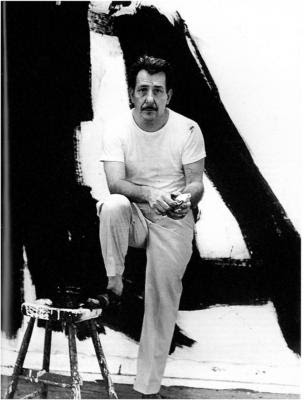
Images and Artist of Intrigue: Franz Kline (American Painter, 1910-1962)

I have a novice and recent fascination with Franz Kline and American Abstract Expressionism.  While I was always drawn to their work through more pop visible figures in the movement, like fellow action painter Jackson Pollack, I had never taken the deep dive.  Kline's work plays to a unique aspect of my obsessive nature, as well as my intrigue with lines and space and how they intersect.  I have a parallel visceral draw to Clyfford Still's paintings, particularly ones in which the "life line" is in balance and easily visible.  A force unto himself, and not necessarily an action painter, Still was an integral figure in the movement.  I can look thru endless images of both artists that I fully appreciate, in search of that one that feels just right, and it changes each time.  Clyfford Still, Willem de Kooning and Franz Kline, as well as other abstract expressionists, have been a natural and inspiring exploration.  I hope the same for some of you.

"Franz Kline’s large-scale canvases, which feature muscular, calligraphic bolts of black paint over white fields, have become icons of mid-20th-century Abstract Expressionism. Kline helped pioneer the movement alongside artists including Jackson Pollock, Willem de Kooning, and Joan Mitchell."  

Franz Kline Paintings:

Untitled (1950)

"...you paint the way you have to in order to give, that's life itself, and someone will look and say it is the product of knowing, but it has nothing to do with knowing, it has to do with giving."  ~Franz Kline


Saturday, January 15, 2022

The Optical Files #8: Kool G Rap - The Giancana Story (2002)

Welcome back to The Optical Files, where Cullen Wade revisits a different album randomly chosen from a pile of 180 CDs in his basement. If you are confused about what's happening or why it's happening on this blog, click here for an intro.


The Giancana Story was supposed to be G Rap's debut album for Rawkus & was supposed to drop in 2000. Instead of coming out on the premier underground hiphop label of the era at the peak of its importance, it got tangled up in some business confusion, delayed for 2 years & finally licensed to Koch (the dumping ground for a lot of rap records in the 2000s). Apparently the Rawkus album had a different tracklist with a lot more features, but it's possibly for the best that we got the lean, under an hour in length, relatively light on features record we did.

Since parting ways with Polo, G Rap did the post-Illmatic thing of working with several producers per album, but Giancana exceeds his previous 2 solo records by featuring 14 tracks with 10 producers. Despite this, the album has a fairly unified sound, it's just not a sound I really vibe with. This is quintessential early 2000s New York street rap, post-boombap--samples were out, MIDI was in. (A lot of this was by necessity, as music publishers were cracking down on sample clearance.) Virginia's own Bink!, best known for his work with Roc-A-Fella, only contributes one beat, but it's the best of the bunch: "Where You At," which brings an eerie vocal chop, booming timpani, tom rolls & sparse kicks to G Rap & Prodigy's cold street tales. (Yes, this album is so New York that it has Prodigy & Havoc features on 2 different songs! Along with AZ & a very young Joell Ortiz, they are the best features; nobody else really impresses.) The overall feel is noisy, aggressive, thickly textured beats, but with a lot of polish, if you like that sort of thing. Personally I would have appreciated a bit more grit & fewer goofy vocal hooks ("Black Widow" & especially "Drama" are offenders).

Kool G Rap is one of the most technically proficient lyricists to ever pick up a microphone. Subject matter-wise, on this album he leans into the NY mafioso style he innovated, which had a major resurgence in the '90s thanks to Raekwon. G Rap's writing here is uniformly excellent--so uniformly, in fact, that it becomes a bit exhausting. It's undeniably impressive to hear him stretch the same multisyllabic rhyme over 32 bars, but both his delivery & subject matter are kinda monotonous. Far be it from me to try to tell one of the inventors of thug rap not to rap about thug shit, but there are no storytelling joints on this (a first for his catalog), no sex songs, no ego tripping joints, no songs from G Rap's more rueful sociopolitical side like "It's a Damn Shame" or "Streets of New York."

Although it was technically a higher-profile label, at the turn of the century releasing an album on Koch rather than Rawkus feels like a downgrade. Apparently the Rawkus version was leaked multiple times in different configurations, as well as some loosies that made their way into the wild. I haven't investigated, but if that version is more balanced re: subject matter, it might be something I'd prefer to 4,5,6. This isn't.

Thursday, January 13, 2022

The Optical Files #7: Haystak - From Start to Finish (2005)

The Optical Files train rolls on with another CD Cullen Wade randomly picked from his basement. If you are confused about what's happening or why it's happening on this blog, click here for an intro.


Ah yes, From Start to Finish. Part 2 of the "White Boy Trilogy," or so declares the cover, preceded by Portrait of a White Boy & followed by Crackaveli. On this album you can find the song "Whiteboy"--not to be confused with the song "White Boy" from his album The Natural, also not to be confused with the album opener, "Big Ass Whiteboy," or his earlier album Car Fulla White Boys.

In case you can't tell: perhaps more than any other white rapper before or since, Haystak is obsessed with being a white rapper. He molded his entire image around it. It's probably not a coincidence that the point when I realized--how do I put this diplomatically?--how fucking weird & suspect that is, was around the same time I stopped listening to a bunch of Haystak.

Of course, most caucasian rappers do a lot of thinking about their (our) place in hiphop & responsibility to it, but when you start playing the victim--not just denying your privilege but actually claiming to be oppressed--it crosses a line. Granted, there was a large contingent of working-class white kids who felt disenfranchised & Haystak's success was tapping into that market (as we'll see, Haystak was a very shrewd self-promoter). But help those kids hold their heads high based on class solidarity or regionalism or anything other than being white, because you shouldn't rally white people around racial pride & I can't even believe I have to type those words for fuck's sake. I haven't kept up with Haystak's later stuff (he continues to release music pretty frequently) but I have to imagine by now he's either knocked that shit off or gone full Tom MacDonald.

I'd venture to guess that regular readers of this blog probably recognize Haystak (if at all) for one thing only: appearing as Mickey in the film Hustle & Flow. That was & remains Haystak's closest brush with the mainstream, although he tried really hard to cultivate beefs with Bubba Sparxxx & (you guessed it!) Eminem a few years later. You can't knock Stak's hustle because he wisely released this album the same week Hustle & Flow hit theaters, and it features what is still his biggest song, "All By Myself," which is as good a place as any to start discussing the music here.

It's a shame about all of the above marketing gimmicks, because at his peak, Stak was a fine emcee whose lyrics, delivery & heartfelt subject matter should have spoken for themselves. In "All By Myself," over a gentle acoustic guitar-based instrumental, he uses his signature melodic flow with lots of punch-ins to talk about the loneliness & hardships of his comeup with engaging honesty & surprising turns of phrase. Other songs on this album cut from the same cloth are "Bonnie and Clyde," (which features the line "from Rocawear to rocking chairs" to describe wanting to grow old with his boo) & "Be Strong," which is the album highlight for me, another acoustic guitar beat where he discusses the jail experience in intense but lighthearted detail. It's like the breezy, optimistic flipside of Beanie Sigel's "What Ya Life Like."

Every song is produced by Sonny Paradise, & the beats vary from dope (the aforementioned few as well as "Bang Bang," where spooky mandolin & sparse drums accompany a cautionary tale about the dark side of success) to embarrassing. Every beat is technically well-produced but it all has a layer of plastic inauthenticity, like a corporate Youtube type beat channel, overreliant on cheap MIDI orchestral strings & robotic sequenced drums. The album's weakest song is also its longest: "I Ain't No Pinup," with a repetitive beat (one of those loops that's supposed to sound like a sample but isn't) & Stak using a monotonous, droning flow--he's always at his best when he gets singsongy. Even in a mediocre song, though, this era of Haystak could always surprise you with an offhand profound bit of lyrics: "Making music wasn't always profitable/Major labels were a lot like hospitals/You don't always come home, sometimes you die in there/Sometimes they're so backed up they slip & leave you lying there."

Haystak clearly has a deep love for Southern hiphop, so it must have been exciting for him to get 2 legends on this album for the only 2 features: Bun B & 8Ball. Their presence, though, just reminds us that as much as he earned his stripes as a street rapper, thug shit isn't exactly his lane. He does a credible enough job on the tracks with those 2 heavyweights, but then there's songs like "U Hard," where he invents fantasy violence scenarios for each member of his crew, & it ends up unintentionally hilarious. (Not to mention the song also reuses the line about "come round through there & light it up like New Years" from a few songs back.)

This era of Haystak is a mixed bag. He sometimes sounds like Cartman from South Park (kinda looks like him too), but not as much as on the previous album. I judge a Haystak album by how many of his heartfelt introspective songs are on there, & this one falls short of Portrait & The Natural. 

Wednesday, January 12, 2022

Bressonian Quote #26 - Notes from a Master Filmmaker


"Cinematographer's film where the images, like the words in a dictionary, have no power and value except through their position and relation. " 
- Robert Bresson


From:  Notes sur le Cinematographe/Notes on the Cinematographer (1975)

Tuesday, January 11, 2022

The Optical Files #6: Blackalicious - Nia (2000)

Cullen randomly picks another album from his basement to write about. If you are confused about what's happening or why it's happening on this blog, click here for an intro.


Rest in Peace Tim Parker/Gift of Gab, 1970-2021.

When Gift of Gab passed away last summer, I felt a little bad for not keeping up with his projects in the years since Blazing Arrow, because there was a time when I counted him as one of my favorite rappers. I only saw him once, in 2003 in New Orleans, but he was just as tight live as on record, casually tossing out mindblowing feats of pure emceeing, & there's no better place to look for that than Nia, the 1st Blackalicious LP. Gift & mad scientist producer Chief XCel cook up an LP's worth of delicacies that are mostly uptempo--but even when they're being deadly serious ("Deception") still have a sense of fun--assisted by their Quannum compatriots Lateef, Lyrics Born & the legendary DJ Shadow.

Because Gift was rapping about pro-black consciousness in a time when gangsta rap dominated the mainstream, stuff like this (& their Northern California brethren like Hieroglyphics & The Coup) got labeled "alternative hiphop," even though they weren't doing anything Brand Nubian or Queen Latifah weren't doing in the mainstream a decade earlier. Still, I remember a friend of mine, when somebody asked him to describe Blackalicious, saying meekly, "they're on that, you know, positive tip," as if he needed to apologize for it.

One of the album's "positive tip" centerpieces is "Shallow Days," where Gift raps about a conversation with a gangsta-minded friend over XCel's trademark dry analog drums, plaintive horns & psychedelic guitars. It's a thoughtfully written song, not a Speech (from Arrested Development)-style holier-than-thou condemnation of the street life. Gift seems to respect where his friend is coming from & wants to get to the root of the problem rather than blame individuals.

The album is full of conscious tracks like this. Gift of Gab really loved Black people, & I love him for it. (There's even a Nikki Giovanni spoken word feature!). But I'd be lying if I said I didn't gravitate to the pure ego tripping tracks. I'm from the era where braggadocio was a key part of a rapper's arsenal--you had to spend at least some of the time rapping about how good a rapper you were, & Gift supplies us with 5 such tracks here: "The Fabulous Ones," "A to G," "You Didn't Know That Though," "Trouble (Eve of Destruction)" & "Reanimation." Each one is an emcee clinic, flexing his multisyllabic rhyme schemes, breath control, enunciation, & nimble flow while making the whole thing look as easy as breathing. These tracks blew my mind when I first heard them, & no matter how familiar I've become with them, they still do. Among lots of other artists, Gift thanks Kool G Rap in the liner notes, & I can clearly hear the influence of Kool G's multisyllable mastery on Gift's style.

Of the 5 ego trip songs, "Trouble" has a great fretless bass sample that sets it apart, but I can't argue with the horns on "Fabulous Ones" & (especially) "Reanimation." I really love horn sections, & Xcel has a way with them.

"A to G" is an interesting piece, part of Gift's series of lyrical workouts (along with "Alphabet Aerobics" & "Chemical Calisthenics"). People who dismiss songs like this as style over substance are missing the point: in this case, the mechanics are the message. Some of the best hiphop emerges from a sense of play, & wordplay for its own sake is a perfectly justifiable end.

Another lane where Blackalicious excelled (possibly better than anybody) was songs describing the relatable feelings of universal experience, & this album contributes "Sleep," a lovely little piece about the simple satisfaction of going to bed buoyed by Xcel's new-agey piano. "A day of work completed, a night of rest is needed/Almost done with a book but eyelids too heavy to read it."

There's not a bad song on Nia. Maybe "Cliff Hanger," where Gift tries a flow that just doesn't work, trying to cram too many syllables into a not very interesting story, but at least the beat is worthwhile, particularly the shivery cinematic strings. No really bad songs, just too many songs. The album clocks in at a hefty 75 minutes (this was back when artists were trying to give CD buyers their money's worth by filling the format to its capacity). Albums from this era were just too long. This one could be a better, smoother listen if they'd cut 4 songs or so. 

Between Gift of Gab's...well, gifts, & Xcel's brilliant cut-&-paste Pete Rock approach & ear for melody, Nia has gem after gem to disclose. I just wish it were a bit more brief & punchy.

Sunday, January 9, 2022

The Optical Files #5: Outkast - Speakerboxxx/The Love Below (2003)

Continuing Cullen Wade's series, revisiting albums randomly chosen from a list of 180 CDs in his basement. If you are confused about what's happening or why it's happening on this blog, click here for an intro.


I bought this on release day at the storied Mushroom record store/headshop on Broadway St. in uptown New Orleans, a few blocks from Loyola University during my ill-fated 1st semester of college. The nation was in the grip of "Hey Ya!"-mania, & once the public had some time to digest the album, there were 2 prevailing schools of thought. The more mainstream opinion was that The Love Below was a bracing, wildly innovative sprawl, while Speakerboxxx was dull & pedestrian by comparison, almost an afterthought. (When the double album won the Grammy for Album of the Year, the presenter announced The Love Below with no mention of Speakerboxxx, which had to hurt Antwan's feelings.) The second opinion, held by salty music heads & contrarian hiphoppers like myself, was that Big Boi's side was an honest, solidly executed rap album compared to Dre's bloated, pretentious offering.

Today's verdict? Honestly, they're both kind of bloated, but Big Boi's has more highlights. Twan himself sets the production tone with swinging standouts like "Bowtie" & "The Rooster," keeping the Dungeon Family horn sound intact even though there's no actual ONP beats on this record. "Bust" is another impressive Big Boi production, with rock guitars balanced against Mobb Deep drums & Twan's pitched-down vocal matching the aggression of pre-woke af Killer Mike. It's too bad "Knowing" is another ode to slut-shaming, because it's one of Antwan's best beats: elastic bass & acoustic guitar with his trademark claves, similar to the short-lived work he'd do with Bubba Sparxxx a few years later. On this listen I also vibed with "War," where he waxes sociopolitical over a crinkly synth by Mr. DJ, & "Reset," a tender song about new beginnings where Cee-Lo absolutely floated--you know you did something right when you're the best feature on an album that has a Jay-Z verse in the mix.

I wish people had made as big a deal about Big Boi's production on his side as they did about how Dre produced The Love Below in its entirety; instead they more often pointed out that Dre had 3 of his own beats on Speakerboxxx. The Outkast sound has always been colorful & organic, but these 3 beats ("Ghetto Musick," "Church" & "Last Call") are bright & shiny but not alive, like a robotic carnival. I respect Antwan's attempt to reassure everybody that Outkast was still very much a group (he addresses it multiple times in the album's lyrics) but the sad truth is that they were drifting apart stylistically, & Dre's 3 contributions to Speakerboxxx show it.

When I listened to The Love Below, the name that came to mind most often was Prince. 3Stacks clearly wanted to emulate the Purple One in tone & subject matter as well as stylistic sprawl, & the best tracks come close to doing it. He clearly had so much fun here playing with jazz, soul, drum & bass, psychedelic rock & futurefunk, & the artist's enthusiasm almost makes up for the excessive length & problematic elements. One thing you can't accuse him of, though, is lack of focus.

(Before we go any further, the official lyric is "Roses really smell like boo-boo"!?!? I've thought it was "poo-poo" for damn near 20 years! Anyway that song, like a lot of songs on here, have a secret weapon in composer Kevin Kendrick's keyboards & arrangements.)

Thankfully for an album this long, Dre pulls off some late-album highlights in "Love in War," with its militaristic snare rolls, distorted 808 kicks & swooning strings, pretty on the nose but a good listen; "Dracula's Wedding," the closest he comes to sounding like Prince; "Take Off Your Cool," an acoustic song with a sultry Norah Jones feature & a good ass message; "Vibrate," a spacey ode to masturbation; & the closer, which I'll get to in a minute. First I have to point out where the album falls on its fucking face, right after the two massive singles, the piece of shit known as "Behold a Lady."

"Where do all the good girls go?" asks 3Stacks. "The classic lady, a rare breed indeed." Gtfoh bro. He goes on to discuss how our grandchildren won't be able to see a real lady outside of a museum or whatever. This is the dark side of Dre's "woman-friendly rapper" insidious nice-guy image that Drake has picked up & run with since André's withdrawal from the spotlight. Stop policing women's behavior dude, it's not your lane. Between the stupid intro, repetitive, unexciting beat, offkey crooning & conservative ass message, this whole song sucks. Like Skillz said, throw it in the trash.

Now we come to the closer, "A Life in the Day of Benjamin André (Incomplete)," which sums up everything right about The Love Below and points out everything wrong with it. Dre's storytelling acumen is on beautiful display here, his knack for offhanded metaphor & surprising lyrical detail, and the beat is just left-field enough to be interesting but it still knocks. It reminds us how good a rapper 3Stacks is, and how little of it he does on The Love Below. It's over 20 minutes longer than Speakerboxxx, features an equivalent level of production, & about 92% less rapping. I'm sorry if this is a basic take y'all, I know he's a creative genius etc. etc....I like André 3000 better when he raps.

Friday, January 7, 2022

The Optical Files #4: Hüsker Dü - New Day Rising (1985)

Hey, it's another album randomly chosen from about 180 CDs in Cullen Wade's basement! If you are confused about what's happening or why it's happening on this blog, click here for an intro.


I've written a lot about Hüsker Dü before. I dedicated a song to Grant Hart on my album Death of the Author, & I even covered "Books About UFOs" from this album in a secret track. The Hüskers are one of my favorite bands ever & Mould/Hart are the Lennon/McCartney of punk rock. New Day Rising has a lot going for it. "Celebrated Summer" is maybe the best Mould song of the Hüsker days. Sandpaper sheets of guitar & Hart's aggressive fills punctuate Mould's emotionally naked lyric about the death of childhood. Another Mould showstopper is "I Apologize," transforming the mundane domesticity of lovers' squabbles into furious hardcore power pop perfection. If you don't scream along to "You take out the garbage maybe, BUT THE DISHES DON'T GET DONE!"...well, maybe your home life is more tranquil than mine.

Hart only gets 4 songs here, but he makes them all count. His standout might be "The Girl Who Lives on Heaven Hill," the most Zen Arcade-ish track on an album that is committed to being sonically distinct from its predecessor. Part of that difference is due to SST producer Spot, who collaborates with Mould to introduce his now-signature practice of burying the vocals in the mix. Songs like "Plans I Make" & "Powerline" have nigh-unintelligible lyrics, & "Perfect Example" & "59 Times the Pain" go even further, with Mould speak-singing in a sleepy, bashful mumble that was nowhere to be found on Zen Arcade.

New Day Rising has one major problem: it is frontloaded as hell. Side A slaps you around with stunner after stunner. Side B is fun--"Powerline" rides a great riff, "Whatcha Drinkin" is a throwback to the band's speedy snotpunk Everything Falls Apart days, "Plans I Make" is a brash noise workout with a dumpster filthy guitar tone--but the only stone-cold classic from the album's back half is "Books About UFOs," compared to the jewel box that is the other side. "I Don't Know What You're Talking About" feels like a less successful rewrite of "I Apologize," & "How to Skin a Cat" is simply unnecessary.

If the 7 best songs from this album were issued as an EP, it would have been the band's crowning achievement & maybe the best punk record of all time. Taken as a whole, even though I love it, New Day Rising is the weakest of the band's SST era.

Thursday, January 6, 2022

2021 Between the Lines #03 - Images of Relevance

Images from January 6, 2021 - Washington, D.C.

"Those who can make you believe absurdities can make you commit atrocities"  ~Voltaire


2021 Between the Lines #02 - Images of Relevance

Images from January 6, 2021 - Washington, D.C. 

Yes, it is horrifying and absurd.  Let us not forget nor minimize.