With occasional reflection on the perpetual absurdity/intrigue of life and society in general.

Sunday, February 6, 2022

The Optical Files #19: Paris - Sleeping With The Enemy (1992)


Paris's 2nd album was supposed to come out on Tommy Boy but, judging its content to be too controversial, the label dropped him, leading him to release the record on his own label & proving, if any more proof were needed, that Tommy ain't my motherfucking boy. The Bay Area's Paris has been a reliable source of fierce political rap for decades now, & of the major voices in conscious rap is probably the one most directly influenced by the Black Panther Party. It's well-known that he also works as a stockbroker, but I haven't investigated to find out how he squares that up with the Panthers' Marxist politics. At any rate, his music has always focused on social issues rather than economic ones.

This album is full of righteous rage against the police, the Bush Sr. administration, & Black people whom Paris perceives as race traitors. After a brief intro, the title track and its followup, "House N****s Bleed Too," open the album with a 1-2 punch of "all skinfolk ain't kinfolk" messaging. Then we get "Bush Killa," an elaborate fantasy, complete with sound effects, about assassinating the then-president. The album's insert has a doctored photo of P-Dog posted up behind a tree outside the White House with a TEC-9 as the president walks toward him. The song & artwork are probably what got Paris dropped from Tommy Boy, but "Bush Killa" is one of the album's highlights, with a beat change midway through from hard-hitting funk to screaming rock guitars.

Paris uses the same booming, straightforward flow on most of the songs--he's not looking to impress you with verbal acrobatics, he wants you to hear what he has to say. "Coffee, Doughnuts, & Death" goes beyond your standard spray-&-pray ACAB track by making specific references to people he knows who have been assaulted by cops. He drives the message home with chilling exactness, & never sounds more confident or rabble-rousing than he does here. In both subject matter & verbal approach, Paris owes a clear debt to Ice Cube. ("My brother down south said 'fuck the police'/I'm saying 'no justice no peace.'") On "Guerillas in the Mist," he goes so far as to appropriate the title of Cube's Lench Mob album, & everything from the beat to the bars to the delivery sounds like an Ice Cube track.  

The production--mostly handled by Paris himself, with assists from Kif & a young DJ Shadow (!)--is generally noisy & thickly-textured, reminiscent of the Bomb Squad's work on AmeriKKKa's Most Wanted. The best beat in that vein is the uptempo "Conspiracy of Silence," built on a skronky sax sample & a funky organ, where Paris & guests LP & Son Doobiest deliver another anti-cop anthem with an infectious chorus. There is also a handful of mellower beats on the album. My favorite is "Days of Old," a melancholy reflection on times when life in Paris's hood felt simpler, that features the quotable "I ain't pro-human cuz all humans ain't pro-Black." Another mellow track is the deceptive "Funky Li'l Party," which starts out with a smooth G-funk-style beat & tricks you into thinking it's a standard high-posting club song, before Paris takes out the scalpel & dissects all the dysfunction in the room. There's an unfortunate bit of slut-shaming here, which is too bad because otherwise the song is one of the most interesting on the album. Another smoother production is the last proper track, an ode to Black womanhood called "Assata's Song," (not to be confused with Common's "Song for Assata") which doesn't have much to do with Assata Shakur herself, but namedrops her in the title as an example of a strong Black woman. 

The mood for angry, vitrilolic, politically-educated hiphop is a very specific jones to satisfy. Luckily, Paris has been plying his trade for 30 years, without much appreciation or acclaim but with a whole lot of consistency. Salute to a hard truth soldier.

Friday, February 4, 2022

The Optical Files #18: Snoop Dogg - R&G (Rhythm & Gangsta): The Masterpiece (2004)


At some point in the 2000s, Snoop Dogg (without changing much about the way he did things for 15 years) was allowed by the mainstream to cross over from menace to society & murder defendant to become a friendly mascot for gangsta rap & potheadism, a role he continues to occupy to this day. Every few years (usually in between album drops), he finds a way to keep himself relevant in the mainstream via something other than music: publicly befriending Martha Stewart; proclaiming himself a rasta & changing his name to Snoop Lion; & in the case of the runup to his 7th album, announcing he had stopped smoking weed.
 
Although he only abstained for 6 months, I guess the experience was meaningful enough to dedicate a song to the topic: R&G's closer, "No Thang On Me." The song, with fully live instrumentation & a Bootsy Collins feature, is produced by Hi-Tek. It's the latter half of an interesting strategy Snoop takes, bookending the album with tracks by boom-bap producers (after the classy Alchemist-manned gospel opener "I Love to Give You Light") while the middle is more radio-ready. Considering this was his 2nd album on a major label after a 3-album stint on No Limit during the '90s, perhaps he wanted to prove how hiphop he still was.

The Neptunes sound dominates this album. Their influence can be heard on way more than the 5 tracks they produce. My favorite Neptunes beat on this album is "Signs," featuring Justin Timberlake & uncle Charlie Wilson. The 3rd single released from the album, it's an uptempo pop song with a fabulous horn section. I'm still not sure why it only charted at 46 compared to the #1 smash "Drop it Like It's Hot." "Let's Get Blown" is another great, glittery Neptunes beat, but it's a bit too close to "Excuse Me Miss"/"Change Clothes" territory. The weakest Neptunes beat is "Pass It Pass It," which tries to replicate their earlier style without success. Regardless of the misstep, there's no denying this era of Snoop x Neptunes was a hitmaking machine.

Snoop's persona is a mix of '90s gangsta & '70s blaxploitation pimp tropes (a blend that culminated in his role as Huggy Bear in the 2004 Starsky & Hutch film, a part he references several times on the album). I can offer no insight as to the extent of his real-life involvement in his Rollin' 20 Crips set, but as a performer, he seems to have gotten less & less interested in gangsta posturing as his career & fame have mushroomed. On this album we get "Bang Out," a perfunctory gangsta number produced by J.R. with a bizarrely offbeat drum loop. (I do enjoy the organ that creeps into the arrangement midway through, though.) "Oh No" is more convincing, thanks to a lively 50 Cent feature & a coldhearted Ron Browz beat. On the whole though, between the aforementioned Neptunes songs, the obligatory Lil Jon strip club anthem "Step Yo Game Up" with the always-reliable Trina, "Fresh Pair of Panties On," & the Nelly-assisted "Girl Like U," R&G-era Snoop is much more interested in cheek clapping than gun clapping.

There's a pretty clear dark side to the pimp persona, though, & we have evidence of that in the disturbing "Can U Control Yo Hoe," which talks frankly about slapping women & otherwise mistreating them, & if there's supposed to be humor in there I missed it. Then we have "I'm Threw Witchu," on which Snoop & Soopafly enact breakup scenarios that amount to little more than calling women names, over a boring, droning Baby Dubb beat that feels strangely unfinished.

I don't know about you, but my ears perk up when Snoop starts rapping about Snoop. That is, deconstructing his own persona, like on the futurefunk "Can I Get a Flicc Witchu," where he seems almost perplexed at his own fame, & "The Bidness," which is a sample-patchwork declaration of his values. I'd never say Snoop gets introspective exactly, but on these 2 tracks are the closest you'll get while he flexes some underrated lyricism.

Me calling albums overlong is starting to feel like a constant in this series, & there's a reason: during the time period I'm examining (1998-2008), albums were too fucking long. This one clocks in at an exhausting 78 minutes, almost the limit of what you can cram onto a single CD. Not only does it have too many songs, it also tries to cover too much ground. This is the outcome of the 2000s attitude of trying to make an album with a little something for everybody, at the expense of focus. R&G will never be the first album people reach for when they want to hear some Snoop Dogg, but it's not an embarrassment.

Thursday, February 3, 2022

150 Films/150 Days - An Introduction to a New Series

To open the new year, I'll be watching 150 films in 150 days and sharing regular updates via this new Blog Series.  Still not quite on par with my screening habits of old, but I have things to do, ya know. As is typical with my annual resolutions, I'm a month late kicking it off.  The first screening was February 1, and the final day will be June 30 (exactly 5 months).    

The idea is to return to my film school roots of obsessively watching all the films from all the places all the time.  This is actually quite light relative to my film consumption in those days.  Between academia, film festivals, and personal, I was likely closer to 4 films a day - and I do not think I'm exaggerating.  It was a deep dive of infinite intrigue for a young evolving cinephile, and I wanted it all. I soon realized that the exploration of cinema is endless and that a lifetime is not nearly enough, but it is worth the Quixotic attempt nonetheless. 

I still get my film festival fixes and obsessive binges, but my every day film viewing has fallen off quite a bit - hence the 150 Film challenge.  The primary objective is to catch up on integral films missed from the past 10 years and beyond, as well as a few just for popcorn giggles.  For instance, though I have watched clips and scenes, I have never actually watched Bergman's The Seventh Seal in full, nor seen the original Halloween, The Rocky Horror Picture Show, The Hateful Eight, The Lighthouse, Bong Joon Ho's The Host, Cassavetes' Shadows, and so on.  I know, shameful, but you get the idea. All the films from all the places, and all are invited to watch along.  

 The sources for the films chosen include:

- Major Festival Winners and Notable Foreign Films from the past decade 

- Highly anticipated Indie Films of recent years that have been on my 'to-watch' list for way too long  

- Intriguing Young Filmmakers 

- Integral Cinema and Auteurs that somehow fell through the cracks

- Major Releases and Buzz Films from the past decade, previously avoided

- Genre classics, particularly Horror and Cult films

- New Releases, and my own personal whimsy on a given day. 

The List is over 150 films deep, and I will choose the order as I go.  Inevitably, a day will be missed here and there, but as long as 150 films are screened in 150 days, all is on track. Though the list is predominantly Narrative Fiction, all major modes of film production and cinematic tentacles are up for grabs - from Fiction to Documentary to Experimental and everything in-between.

I'll be making regular posts of 5-10 films at a time, including my screening notes.  Each film will be listed with the release date, relevant creative contributors, the means of screening (theater, dvd, or streaming service), a written response to the film and a recommendation level.  The responses are NOT intended to be formal analysis in any regard.  Quite contrary, they are random screening notes with no guidelines.  Some comments are written before viewing, some during viewing (when at home), and some after viewing.  You will receive the screening notes exactly the way they are scratched in my notebook.  The text will have no editing other than that which is necessary to make them legible.  In other words, the individual film responses will likely be the sloppiest and crudest writing I have ever committed to this blog, so there's that.  It'll offer you insight into what my film festival screening notes often look like when covering as press. 

Finally, after the screening, I will assign a level of recommendation to each film as follows: 
HR-highly recommended, R-recommended, N-neutral, F-failings too extensive to appreciate (hopefully never used, or at least rare).  

Wednesday, February 2, 2022

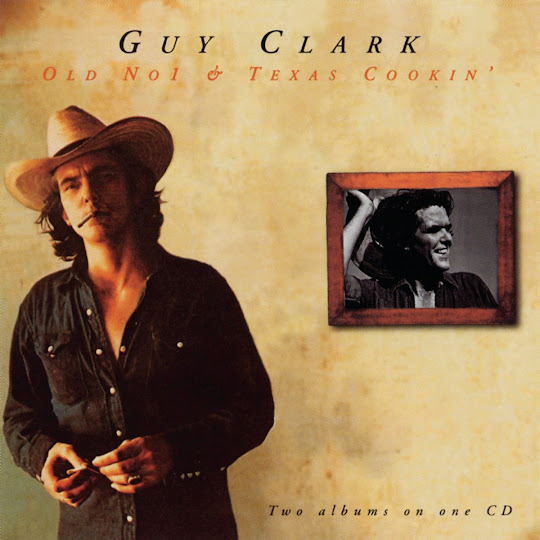
The Optical Files #17: Guy Clark - Old No.1 & Texas Cookin' (1975 & 1976)


I bought this CD on a whim from the sale rack at Tower Records in 2006. Back in the '90s, labels took advantage of the CD craze (which had about twice the capacity of a 12" LP) to take 2 albums from their catalogues, bundle them together, & market them as a 2-in-1 value. Today this seems desperately tacky (probably why they were filling discount bins as early as 2006), but in the '90s it seemed like more bang for your buck. This compilation by Camden Records reissued Guy Clark's first 2 albums, Old No. 1 (1975) & Texas Cookin' (1976).

Old No. 1 contains his most well-known songs: "L.A. Freeway," which Jerry Jeff Walker had a hit with in 1972, & "Desperados Waiting for a Train," which the outlaw country supergroup The Highwaymen took to #15 in 1985. Those 2 songs deserve their reputations, but every other track on Old No. 1 is equally good. I've always loved "She Ain't Goin' Nowhere," a portrait of a bruised but unbroken woman striking out on her own that opens with the beautiful line "Standing on the gone side of leaving." The mid-album ballad "That Old Time Feeling" is another gem (with backing vocals by Emmylou Harris!)--a catalogue of poetic images that attempt to capture rueful nostalgia, each more poignant than the last: "That old time feeling draws circles around the block/Like old women with no children holding hands with the clock."

As a lyricist, Clark is at his best when he's writing about regret, loss & the passage of time. As a songwriter & arranger, his secret weapon is the anthemic chorus--the huge hook that seems to come out of nowhere, sweeping over the listener like an overpowering wave. Both of these traits are on display in the album's 2 most famous tracks. To all appearances, "L.A. Freeway" is a simple song about moving away from the big city. But in Clark's hands--and underneath the sparse instrumentation, ghostly harmonica & steel guitar visiting but not staying--it encompasses the whole gamut of emotion: the relief of moving on, the fear about being able to handle what's next, the strength of love & the hope of second chances. To me, the L.A. Freeway is any wrong turn you take in life, any unwise detour that you just pray you can make it back from. I've been on a few L.A. Freeways in my life, & luckily I've made it off them without getting killed or caught, but the outcome was far from certain.

"Desperados Waiting for a Train" is about Clark's grandfather getting old & dying, but in a larger sense it's about the essential sadness of the American mythology. The chorus image is one taken from any number of western movies: hardbitten men standing on a train platform. Why are they waiting for the train? Are they going to rob it? Are they fleeing town? Are they leaving their lives of crime behind? It turns out, at the end of the song, that the train is death--the only outcome we can be sure of. "One day I looked up & he was pushing 80/and there's brown tobacco stains all down his chin/Well to me he was one of the heroes of this country/so why's he all dressed up like them old men?"

The 2nd album on this disc, Texas Cookin', is a slight step down from Old No. 1, with fewer memorable songs & a more "Nashville" feel to the production (you can really hear it in the glossy drums). This one for sure has its standouts, though, like the opening title track, a rollicking ode to the cuisine of Clark's home state. I appreciate that he mentions Mexican food as well, & doesn't just limit his tribute to white people Texan food. "Anyhow, I Love You," a love ballad for the lost & disappointed, is another highlight, with harmony vocals by Emmylou Harris, Rodney Crowell & Waylon Jennings. Waylon's distinctive voice shows up again on another album standout, the closer "The Last Gunfighter Ballad." Almost a sequel to "Desperados," it is a meditation on the decay of American myths in the face of marching modernity--& questions whether those myths were worth glorifying to begin with.

Guy Clark is one of the greatest country songwriters of his generation. Part of the same Texas scene that produced Townes van Zandt, Blaze Foley & Steve Earle, he equals or surpasses all of them with a poetic sensibility reminiscent of fellow Texan Kris Kristofferson. The record-store purist in me still has a little shame about having bought the cheesy 2-in-1 CD, but it led me to these songs, so I really can't be anything but grateful.

Monday, January 31, 2022

The Optical Files #16: David Banner - Certified (2005)


On September 21st, 2005, I flew out of Dulles Airport to Sevilla, Spain for my fall 2005 semester abroad. I knew the airport by heart after having worked there as a baggage handler for the past year. My flight departed from concourse A, but I had some time to kill so I made a special trip on the mobile lounge to concourse C because that's where the California Pizza Kitchen & the record store were, & the new David Banner album had just dropped. It's quite possible that I played the CD in my discman on repeat for the entire flight, or close to it.

I tell this story by way of explaining why it's hard for me to be fully objective about this album. I just have so many rose-tinted memories associated with it. In some ways, Certified feels like a time capsule of everything you needed to make a mainstream rap album in 2005: A Lil Jon beat & feature; a Twista feature; a few contributions from Jazze Pha (what happened to that guy?); a Mr. Collipark-produced snap song with the Ying-Yang whisper flow; a rap-rock collaboration (Linkin Park & Jay-Z's joint project was huge the previous year). On the other hand, the album is infused with a deep soulfulness & social conscience. David Banner was the DMX of the south: an almost cartoonishly aggressive, macho presence who could turn on a dime into authentic spiritual anguish. On Certified, the former Southern University student government president gave me what I craved from rap at the time: cultured, politically aware, unapologetic hood shit.

"I'ma come to the crib, I'ma flood my block/I'ma ride downtown yelling 'FUCK TRENT LOTT'/They done raped grandmama, they done took our land/Now they wonder why a n**** don't give a hot damn"

Banner always had a thing for guitars, but this is the most guitar-driven & rock-inflected his music ever got. He produces 10 out of 17 songs, & of those self-produced joints, all but 2 feature prominent guitar parts. Only 1 feels derivative of his prior work--"My Life," which wants to be "Cadillacs on 22s" pt. 2 before "Cadillacs on 22s Pt. 2," but still features an interesting lyric about betrayal. Of the Banner beats, the scorching, Craig Love-assisted opener "Lost Souls," quoted above, is one of my favorites, as well as "2 Fingers," which manages to find a unique sound with stomps & handclaps overdubbed what sounds like 50 times in place of drums (Banner reuses this trick on "Thinking of You") plus driving acoustic guitar chords & wordless backup vocals. Sadly, the lyrics on the latter song don't reach the heights of the beat--it's another one of Banner's desultory pimp anthems.

Banner took an interesting approach to sequencing this album--rather than interspersing songs on different topics, he organized it into 4 rough chunks. Starting with "2 Fingers," we get 4 songs about women in a row, just like at the end of the album we get 4 conscious joints in a row. The quarter of Certified preoccupied with sex & love is the section that comes the closest to making me lose interest. At best, Banner doesn't have much interesting to say on these topics. At worst, we get "Play," which rides the short-lived Ying-Yang Twins "Wait" whisper-flow wave, which aged horribly. I absolutely acknowledge that the song is meant for the strip club, not backpacker headphones. Still, I doubt the production--with the vocals mixed so prominent as to overpower everything else--would sound good anywhere, & today the whole thing is just embarrassingly dated.

Another interesting beat is Get Cool's contribution, "On Everything" ft. Twista, which samples "King's Motorcade" from Coming to America while also paying tribute to the flyness of HBCU marching bands (which also had a bit of a moment around this time thanks to the movie Drumline). Then there's Westside, which is one of the album's jewels. Over a G-funk-influenced beat by Maestro, Banner pays tribute to...well, pretty much every west coast rapper he could think of. To hear an artist so fixated on his own region show so much love to another region is heartwarming. There's no ulterior motive, he's not trying to hit any kind of lick, he just loves west coast hiphop & wants us to know it. Westside is pure love, & I wish there were more songs like it in general.

Despite the abundance of features (15 guest rappers across 17 tracks, not even counting the guest singers), Banner never gets lost in the mix, & that's a testament to his strength of personality. The features themselves are stellar. I've got a soft spot for bellowing giant MGJ on "Gangsta Walk"; Boosie, who floats over an uptempo beat full of orchestral chops on "Ain't Got Nothing"; & BG's shivery, ghoulish flow on the horror-esque "Bloody War," full of eerie portamento synths. Talib Kweli shows up on the dead prez collab "Ridin'" trying a flow that just doesn't work, but I respect any verse that mentions Bunchy Carter. But the award for best feature goes to Banner's old Crooked Lettaz partner Kamikaze, who makes a too-short appearance on "X-ed." (Not to be confused with the Too Short appearance on "Take Your.") I don't know much about Kamikaze & why he & Banner parted ways, but they always had great chemistry & I would have liked to see more work from the duo.

Nowadays I don't find myself drawn to records that have as much unbridled testosterone as this one does, but that probably says more about me than about the album. For me this is by far the best David Banner album, & the only one where he struck the perfect balance of conscious & street, without being too ratchet for the conscious heads (like he was before) or too woke for the streets (like he became after). This is the sweet spot, & I'll still spin it pretty often to this day. I usually skip tracks 5-7 though.

2021 Between the Lines #06 - Images of Relevance

For the Art and the Image.  Photography chosen for artistic attributes above all else.


Links:  

Saturday, January 29, 2022

The Optical Files #15: Cypress Hill - Cypress Hill (1991)

DJ Muggs is in the midst of a career resurgence, at least as far as press is concerned, thanks to a string of well-received solo projects & collaborations in the last few years. For a while, though, it seemed like Muggs was a hiphopper's best-kept secret--one of the most important sonic innovators in the genre but generally flying under the radar compared to the superstar producers he inspired. For an example, look no further than the album that started it all (respect due to 7A3), Cypress Hill's 1991 self-titled effort.

(Coincidentally, as I write this, yesterday Cypress Hill announced a new album to be fully produced by Black Milk, with no Muggs in sight.)

One listen to Cypress Hill confirms Muggs, who produced the whole album, as one of the unsung architects of the West Coast gangsta sound. The slower tempos on songs like "Pigs" & "Stoned is the Way of the Walk," loping basslines & druggy atmosphere are distinct from the sharper, more uptempo production of earlier L.A. gangsta acts like Ice-T. Still, Cypress Hill's particular blend of elements is wholly unique: skanky funk guitars, psychedelic leads, Latin rhythms, & samples like vocal chops, sound effects, isolated bits of noise that come & go in the mix like random synapses firing in the stoned brain. The overall effect is off-kilter, carnivalesque (see the brief hurdy-gurdy beat change in the middle of "How I Could Just Kill a Man"), colorful & vaguely comedic. The congregate impression is of the world turned slightly askew, leading to surprising flips like the "Duke of Earl" sample that propels "Hand on the Pump." Even the cover art is stretched out of shape, mimicking the distorted view through a haze of cheeba smoke.

This cartoonish quality extends to the lyrics & vocal performance. B-Real's nasal falsetto delivery is a love-it-or-hate-it element; personally I love it, & I'm always a little disappointed when Sen Dog starts rapping. No disrespect to Sen--he & his brother Mellow Man Ace are legends in Latin rap--but he's significantly less interesting than B-Real both lyrically & vocally. Most of the album showcases B-Real's nimble flow, as he seemingly invents slang on the fly, flips turns of phrase without calling attention to them, cracks sly asides & dares you to keep up. Cypress Hill never took themselves as seriously as other West Coast gangsta acts (though, for what it's worth, Sen & B are genuine gang members). Although there is plenty of violence in the lyrics, the whole thing is shot through with a sense of gregarious fun. I think this element is what made Cypress Hill such a successful crossover act with white suburban audiences. They delivered tough street tales with just enough winking at the camera to make the pill easier to swallow, & their music had a rock & roll bent that got more pronounced as the years went on.

"Pigs" is a great opener, setting the stage for what is to come, with a monumental beat & a sneering anti-police message that's almost makes me forgive this for being the 2nd album in this series where you hear a homophobic slur before a full minute has elapsed. On the other hand, Cypress Hill lacks the extreme misogyny that was a common feature of this era of gangsta rap. B & Sen crack a few jokes at the expense of objectified women, but there's nothing approaching the extreme woman-hating of an album like N.W.A.'s Efil4zaggin, which was made contemporaneously, released 3 months earlier, & had a similar sonic profile.

Ultimately, for me Cypress Hill fall into the Busta Rhymes category of iconic, influential hiphop figures who never managed to make a truly great album. I'm tempted to use the word "frontloaded," but the problem is more just a dearth of ideas. All the good ones were used in the album's first half, & the rest starts to feel a little samey. There are surely bright spots on the album's back half ("Stoned is the Way...", "Latin Lingo," "Tres Equis"), but overall it feels like all the crew's tricks have been exhausted by track 9.

One thing I've always loved about early West Coast gangsta rap is its diversity. Boo-Yaa T.R.I.B.E. represented American Samoa, Mellow Man Ace & Kid Frost brought Latin flavors, & there were even folks like Muggs, Everlast (pre-House of Pain he was part of Ice-T's Rhyme $yndicate) & Eazy-E's signee Tairrie B representing the mayonnaise delegation. The multi-platinum-selling Cypress Hill were the first crew to bring Latin rap to the mainstream, & they have proudly represented their Cuban & Mexican roots ever since. Despite any quibbles I have about the album, that (& the 2 million+ units it sold) are things I can never argue with.

Friday, January 28, 2022

Titane - Featured Film of Interest - Winner of the 2021 Cannes Film Festival Palme d'Or

Titane, directed by Julia Ducournau and winner of the 2021 Palme d'Or at Cannes, is my most anticipated film of 2021.  Though it was released in October, I have yet to see it due to zero opportunity.  I'm hoping for a local theater screening in the upcoming months (Violet Crown, please), but have yet to see notice of one.  I do not think it is yet streaming, but if it is, I'm pretty certain that I will hold out for the big screen.  I may have to travel a bit, Richmond/DC style.  For those of my friends and colleagues in major markets and larger cities that have had the chance to see Titane, well, keep it quiet - you already know I'm jealous.


Director Julia Ducournau after her win
'Titane - an outlandish film packed full of sex and violence - has won the top award at the 2021 Cannes Film Festival.

Director Julie Ducournau is only the second woman to receive the Palme d'Or and the first female to win it alone.'


Links:  

- BBC - Cannes Film Festival:  Titane wins top Palme d'Or prize 

- The Guardian - Julia Ducournau:  "Women Kicked serious ass this year"

Thursday, January 27, 2022

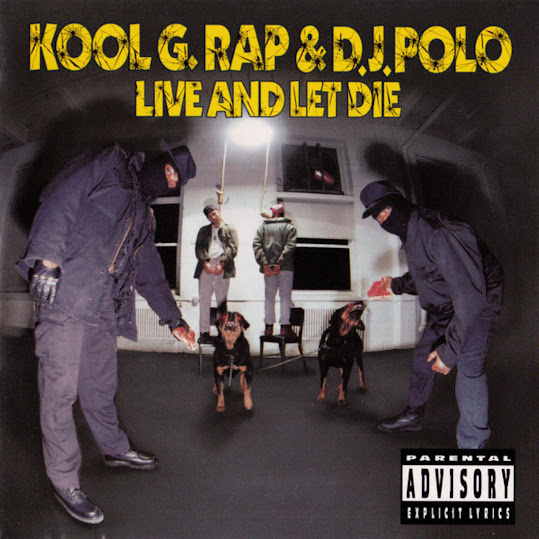
The Optical Files #14: Kool G. Rap & D.J. Polo - Live and Let Die (1992)


A few weeks ago when I wrote about Kool G's 2002 album The Giancana Story, my main critiques were of the production & the monotonous subject matter. If I'd known this album would be coming up on the random number generator so soon, I would have offered Live and Let Die as a counter-example. Not only does this album feature the best production G Rap ever had, it also switches up the subject matter often enough to keep things interesting, without ever veering out of the emcee's established lane.

In the Giancana piece I wrote: "Far be it from me to try to tell one of the inventors of thug rap not to rap about thug shit," & indeed, there's not a song here that doesn't fall into the general thug shit category, but within that there's so much variety. G Rap tells extravagant crime stories ("On the Run," "Train Robbery"); sex raps both descriptive ("Fuck U Man") & comically narrative ("Operation CB"); grim observational pieces tinged with social conscience ("Crime Pays," "Ill Street Blues,"); focused rhymes on specific street topics ("Go For Your Guns"); general braggadocio ("Letters," "#1 With a Bullet"); vivid tales of madness approaching horrorcore territory ("Straight Jacket," "Edge of Sanity").

The fresh sound of the album is thanks to West Coast producer extraordinaire Sir Jinx, making his first contributions to NYC hiphop after several years of working with Ice Cube & his associated acts (Cube & Jinx's partnership even predates N.W.A.). The result is a beautiful bi-coastal blend of sounds, with NY's noisy rat-a-tat-tat colliding with LA's stoned, loping funk in tracks like "On the Run," with its slow tempo & skanky guitars, & "Crime Pays," which could easily be an Ice Cube track circa Death Certificate.

G Rap hadn't developed his extended multisyllabic rhyme schemes yet, but this is peak lyricism for this era of his career. He keeps up with Big Daddy Kane's rapid-fire patter on "#1 With a Bullet," & spins heads around in the bar-baric "Letters." As always, I'm less impressed with his lyrical treatment of women. "Fuck U Man" is a sequel to "Talk Like Sex," & as always I struggle to imagine any woman thinking these come-ons sound appealing: "I'm leaving bitches' vaginas with more stitches than Frankenstein." He's bragging about his sexual prowess (in particularly violent terms) to an audience wholly made up of other men--which is fine, but probably not what he intended. Anyway, the misogyny reaches a career low on "Train Robbery," where he literally boasts about sexually assaulting one of his mugging victims. Obviously the song is so outlandish as to make no pretensions to realism, but it also lacks the perspective that might give a moral dimension to the brutality.

A good comparison for the rape talk in "Train Robbery" is Geto Boys' "Mind of a Lunatic." G Rap is clearly influenced by the abject, debauched style of the Texas crew on songs like "Straight Jacket" & "Edge of Sanity," & he goes so far as to invite Scarface & Bushwick Bill onto the closer, "Two to the Head," also featuring Jinx's partner Ice Cube. I think Cube brings the best verse to this posse cut, but all 4 emcees do prime work here. 

3 weeks after this album dropped, The Chronic came out & completely obliterated any momentum Kool G's brand of hardcore might have had. Still, the closing track sums up the whole album: bringing together the finest ingredients from the east, west & south to create one of the key gangsta rap albums of the transitional period as the '80s combusted into the '90s.