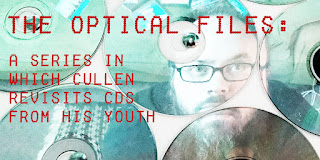
With occasional reflection on the perpetual absurdity/intrigue of life and society in general.

Monday, March 21, 2022

150 Films/150 Days #06: Films 36-44

To open the new year, I began this series, 150 Films in 150 Days, as a means of returning to my screening habits of old. Click the link to read the Series Introduction.  The general idea is to return to my film school roots of obsessively watching all the films from all the places all the time.  

The Comprised List is over 150 films deep with integral films missed from the past 10 years and beyond, as well as a few just for popcorn giggles.

I'll be making regular posts of 5-10 films at a time, including my screening notes, random and unedited.  Each film will be listed with the release date, relevant creative contributors, the means of screening, and a written response.

After the screening, I will assign a level of recommendation to each film as follows: 
HR-highly recommended, R-recommended, N-neutral, F-failings too extensive to appreciate (hopefully never or rare).

The first film watched was February 1, and the final day will be June 30 (exactly 5 months).  
All are welcome to watch along.


Films 36-44:  

Note:  Films 19-54 are predominately from 2021, as we have simultaneously been comprising our 
Top Films of the Year List.  The first 50 films of the Series, in large, have been pointed toward recent releases and contemporary films, with a few cult classics sprinkled in.  Moving forward, we will broaden the range of cinema explored and grow back thru time, as well as continue with current films.

36.  Creed II (2018):  Watched on Hulu, 03/08.  Directed by Steven Caple Jr, Performances by Michael B Jordan, Sylvester Stallone, Tessa Thompson, Dolph Lundgren, Executive Producer Ryan Coogler. 

Screening Notes - Scratch notes from pen to paper to you, no edits:
Of course I saw the first Creed - it was Ryan Coogler and Michael B Jordan teaming up again and breaking into big budgets.  I would have followed Coogler anywhere after Fruitvale Station, and for the most part Creed did not disappoint.  Coogler didn't direct this one, as he was busy with a little film called Black Panther, but he was involved as an Executive Producer.
I unapologetically admit that I have a thing for Rocky movies and grew up watching them.  Rocky (1976, original) is the only one I defend in earnest, but I'm a sucker for all.  My dad took us to see Rocky 4 in the theater when I was way young and I remember full on cheering and screaming from the late-cold-war infused audience.  I didn't have a clue about the politics or the shameless fear-mongering of the Reagan propaganda machine, but it was an exhilarating cinematic experience for this young'n.  It imprinted the power of cinema in my mind.
Creed II being a throwback to Rocky 4, and current circumstances considered (it opens in Kviv, Ukraine), seemed appropriate to watch.  I needed a good ole Rocky movie, and, yep, that was a Rocky Movie thru and thru - thoroughly enjoyed.  Quality lineage to R4, and more responsible with the politics and social ethics - only vague hints of nationalist propaganda, ha.
Recommendation Level:  R (especially for Rocky fans)

37.  White God (2014):   Watched on Apple TV (rent), 03/09.  Hungarian Indie film Written and Directed by Kornel Mundruczo.


Screening Notes:  Won Prize UnCertain Regard at 2014 Cannes Film Fest.  This was my most anticipated film that year, much like Titane this year, and somehow just put it off this long.  
The film concept alone is personally striking to me on two notes:  1. I'm a bully dog/pitbull rescue advocate and my furry partner/best friend is a pitty rescue, so...  2. The first short script I wrote in Film School touched on a similar concept concerning a pack of escaped urban strays, and still the basis of a feature narrative idea in my lil screenwriting journal.
- (30 mins in) So much my kind of film, but this is going to tear me up.  Horrific.  The Girl and dog Hagen are F'n fantastic together.
- I can't believe the wranglers got the dogs to do some of this - they are acting.
- Not a flawless film, but exceptional and I wouldn't change a thing.  I love this film and everything about it.

Note:  272 actual dogs were used in shooting the film.  An extraordinary ethical disclaimer appears in text at the opening - "All of the untrained dogs who perform in this film were rescued from the streets or shelters and placed in homes with help from an adoption program."
Recommendation Level:  HR (to say the least)

38.  WeWork:  Or the Making and Breaking of a $47 Billion Unicorn (doc, 2021):  Watched on Hulu, 03/10.  Directed by Jed Rothstein, Appearances by (with great shame for all) Ashton Kushner, Gwyneth Paltrow, Rebekah Paltrow, Adam Neumann, A Hulu Production.

Screening Notes:  Not bad as a traditional style doc, necessary story to tell, and very hard for me to watch and relate generationally and socio-economically.  Nice way of saying these folks are all utterly ridiculous to me, and grotesquely egocentric to the level of doing great harm - clowns and privileged brats with infinite financial means.  Welcome to the 21st Century boom.
Definitely feeds into and enlightens all the weakest and most confused elements of the young, socially-challenged generation behind me.  This is the great Millenial Tragedy, on repeat and homogeny included.  A generation lost in time between the before and the after of the Technological Revolution - hard empathy but empathy nonetheless.  
Recommendation Level:  R

39.  The Batman (2022):   
Watched at Alamo Drafthouse, C'ville, 03/13.  Directed by Matt Reeves, Performances by an insanely gifted cast that tried real hard to carry a weak script (Zoe Kravitz was not necessarily a strong link in that chan).

Screening Notes:  Eh, that was that.  I saw it and won't be getting those 3 hrs back.  I think Matt Reeves and I have a very different cinematic and social world view.  It is worth noting the generic "white male American" perspective that Reeves reinforces and slips in with a not-so-slight of hand. 
He appears to think the victimized poor, homeless, and addicts are the problem and need eradicated - pretty simplistic and irresponsible.  I'm disappointed not to see this aspect discussed more, but perhaps the lack of depth in the film just has folks forgetting to consider the filmmaker's social messaging.
Plenty of candy and some cool visual stuff, even a few cool directorial decisions.  
Damn good cinematography.  By the middle and even more by the end, I just couldn't care less what happened, and the good candy wasn't nearly enough to carry.  
Note to Reeves - 'Save the Cat'.  No intro and five endings - hmm?  Can't imagine why the storytelling felt so labored and the viewing so tedious.  
Recommendation Level:  N

40.  Silver Linings Playbook (2012):  Watched on Netflix, 03/14.  Directed by David O Russel, Performances by Bradley Cooper, Jennifer Lawrence, Robert DeNiro. 

Screening Notes:  O'Russel is a skilled filmmaker, but always seems a notch overrated.  Never quite as good as his acclaim.  That comment can carry over to the two lead actors as well.
This was an Academy darling and 'that' pretend-indie of the year that became the singular indie buzz of award season.  Hence, I never watched it quite purposely.  I just needed a decade for it to come down to earth.  
- Boy o boy, that big W (TWC) coming up on the screen sure doesn't conjure what it once did.  
- Seems pretty respectful to the topic for most part.  Perhaps a bit playful at wrong times, and underdeveloped reality. Constant trash bag is a bit much and largely ignores the illness past the beginning.  Room for ethics of filmmaking discussion.
- Pleasant, charming, well shot.  Not reinventing the wheel for sure, but aware filmmaking.  More comedic than expected, which is probably a good thing, but inconsistent tone as it progresses.  
- Witty 'odd couple' movie - good characters, pretty good performances.  Kinda like Jerry Maguire for the 2010's ;
- O'Russel likes dysfunctional families and is good at it, but some scenes with family toward the end just too silly to work.
- Same as I feel about other O'Russel films - good movie, not great.  Overhyped and devolved as it went on, but still enjoyed.  I get the appeal.  Easy watching that's still relatively substantive.  
Recommendation Level:  N

41.  Promising Young Woman (2021):  Watched on HBO, 03/15.  Directed by Emerald Fennel, Performances by Carey Mulligan, Bo Burnham, Alison Brie.

Screening Notes:  Buzzy indie fem revenge film that I'm hoping fulfills it's promise.  
- Campy, heavy handed, unapologetic, and I think it works.  Some nice 80's throwback shots, stylistically - a little Heathers-esque. 
- Somewhat lo-fi production style, done well.
- Nice nods to cinema of the past.  
- Romantic parts intentionally cheesy, but charming.  I don't like romance montages, even mocking. 
- Clever dialogue at times, but a lot of near hits and misses.  Just not quite as clever or smart as it tries.
- Bo Burnham Performance?  Cliche dialogue and narrative trajectory, even beyond the parody.
- Good concept, good premise, and fulfills promise at moments.  Maybe trying to be too many things at once.  Seems to lose it's bite at times, switch pace and tone a bit stumbly.  
- 3rd Act redeems and brings it all back around - it fooled me good.  Ha.  Shite.  I really like.  Wicked.  Harsh twist but exactly right.  That's what I wanted to see, and very much invested.  
- The end got harsh and twisted.  Did Not see it coming - the kind of twist end that makes me reevaluate the whole film.  Well done.

Recommendation Level:  R

42.  Parallel Mothers (2021):  Watched on Apple TV, 03/16.  Written and Directed by Pedro Almodovar, Performances by Penelope Cruz, Milena Smit. 

Screening Notes:  I am very much an Almodovar fan and at one point was particularly smitten by his work and thoroughly explore his early filmography.  I consider him one of the true originals and great auteurs of our time.  I haven't been as drawn to his more recent films for whatever reason, and haven't seen his films for the past decade or so - time to catch up.  
- Insanely good Production Design/color palettes, of course.  Love it.  It's a return to his bold notorious decor and design of old.  Feels like home cinematic home.
- Oh the tricky subtle brilliance of his shots and style.  His frames are unlike any other - Angles, Depth! Small creative camera moves.
- Cruz gives an extraordinary performance.  
- Almost forgot how good and original his stories are, and he continues be the champion of alternative families.  Interesting themes of ancestry. 
- Almodovar had something to say quite specific and bold, politically.  Awesome.  Relevant to Spain - need to research the Spanish history and injustice referenced.
- Common technology difficult to shoot and integrate into cinematic storytelling.  Almodovar did it heavy and extremely well.  Dude can make anything interesting.  
- Almodovar of old in an updated world - F'n fantastic.

Recommendation Level:  HR

43.  Drive My Car (2021):  Watched on Hulu, 03/17.  Directed by Ryusuke Hamaguchi, Performances by Hidetoshi Nishijima, Toko Miura, Reika Kirishima.

Screening Notes:  Competed at Cannes 2021, which was its world premier, and won 3 awards.  Won Academy award for Best Foreign Film.  I don't know much about the film or filmmaker other than seemingly consensus acclaim.
- Slow, poetic and beautifully shot.  I get why and how it garnered much critical attention.
- A whole lotta dialogue and bedtime/sexual storytelling.  Not usually by cup of tea.  Boy/Girl relations of this sort (the marriage) bore me - we'll see.  The Driver girl relationship is very interesting.
- 30 mins. into a 3 hr film and already looking for a way out.  Are we sure this isn't a French Cafe Film?
- Driving montage and motif?  eh.  Sooo many parking garages.
- Nice, subtle soundscape - amplified buzzing.
- I find the pace and runtime of this to be a bit audacious.  I knew I should have been suspicious after it became an Academy darling, ha. 
- The narrative beats are way too convenient. 
- Rewards patience, which I appreciate.
- Lovely film with great performances all around, that I just couldn't connect to.
- Very good film.  Overrated by critics and awards, but good.  The film is like the subject and the text - meticulous and tedious but sort of beautiful.

Recommendation Level:  R (if you have 3 slow hours to spare)

44.  This Is Not A Burial, It's A Resurrection (2021):  Watched on Apple TV, 03/17.  Directed by Lemohang Jeremiah Mosese, Performance by Mary Twala, Jerry Mofokeng

Screening Notes:  I'm not sure when this film first came on my radar, as it has garnered numerous awards and attention at notable festivals, including Hong Kong IFF, Sundance, Montreal, and more.  Looking forward to this one.
- Full on from the tradition of art/experimental cinema through beginning.  More lo-fi and transparent digital shooting than expected, but gorgeous and innovative use of that aesthetic.  
- Brutally slow push-in dollies, and break fourth wall.  Love love the opening shot (pre-title).  
- Eerie good soundscape - hollow essence of new meets old.
-Traditional storyteller framework.  Ancestry, spirituality, and colonial impact. 
- Not the easiest of experimental narrative styles for me to connect to, but intrigued.
- Lighting - wow!  Worth watching for the imagery alone - spectacular cinematography at times.
- It works its way into a more traditional narrative.  Less experimental as it goes on.  Familiar narrative beats - not sure I love the shift.
- Requires a conscious meditative giving of oneself to the film, but offers appealing trance-like bridges.
- Hmm?  Challenging and legit original, well made, potent, poetic.

Recommendation Level:  R (for folks interested in Art Cinema and International Cinema - not so much for others)

Sunday, March 20, 2022

The Optical Files #40: KRS-One - Kristyles/The Kristyle (2003)


This album exists in 2 versions: the retail one, Kristyles (which I bought on release day, shout out to the long-dead record store in the Gum Springs shopping center on Rte. 1 in Mount Vernon VA) & the self-released street version, The Kristyle, which I bought from KRS at a show. Apparently Kris had a problem with the people at Koch proceeding with the tracklist & album artwork before he signed off on it .(He didn't like how tough he looked in the cover photo.) The Kristyle has a different track order, some of the songs have different titles, & there are a few songs on each version that don't appear on the other one. I'll elaborate on those differences below, but whichever version you listen to, this is probably the pinnacle of 2000s-era KRS-One.

Kris always excelled at concepts. Very seldom do you feel like he's just rapping to rap. Every song has a point, & that gives his albums purpose & personality. Here we have tracks like "Underground," where Kris explains what the title word means to him over hard kicks & spacious ride cymbals; "How Bad Do You Want It" featuring Pito, where a grandiose beat with orchestra & choir accompanies Kris as he discusses how people keep asking him to "put them on" without being willing to make the necessary sacrifices; & "9 Elements," which doesn't appear on the street CD. That's a pity for 2 reasons: (1) I really like the flutes, & (2) "9 Elements" is the most cogent, concise explanation Kris has ever given of the connection between study of the elements & the ultimate goal of victory over the streets. Other songs missing on The Kristyle are "All a Struggle," which rides a nice '70s-flavored blaxploitation soundtrack-esque beat; "Things Will Change," & "The Movement," which frankly I can do without--both beat & lyrical sentiments sound a little too familiar without much to set either apart. 

The beats are handled by a variety of producers: KRS's tour DJ Tine E Tim, his brother Kenny Parker, Ghetto Pros, & a few others. The production heroes are Da Beatminerz, who give us the eponymous intro on the self-published version as well as "Underground," plus the best song on either album, "Somebody." Over an epic orchestral beat with heavy timpani, Kris uses a triplet flow to accent the kick drum triplets as he raps about how everybody has a part to play in the beautiful chaos of life. This song was, & is, meaningful to me because I've always suffered from low self-esteem & envy, & I compare myself to people doing what I perceive to be better than me. In those moments, this song is a balm, reminding me that we are all where we are supposed to be at any given moment, maintaining the balance of the universe. "Somebody gotta be up, somebody gotta be down/ somebody gotta be the teacher, somebody gotta be the clown/somebody gotta be lost, somebody gotta be found/somebody gotta be in the economy making the money go round [...] somebody gotta be somebody, for somebody else to be somebody."

Two other highlights are both beats produced by KRS himself: "Survivin'" & "Gunnin' Em Down." The former sits atop a funky drum loop while Kris & Priest rap about what it takes to stay alive, both physically & spiritually, augmented by a heart monitor beep added to the percussion. Kris laces "Gunnin' Em Down," the purest boom-bap song on the album, with a dusty chopped jazz bassline while he talks greasy to his haters & doubters. Even in a pure ego trip song like this one, Kris always has some gems of wisdom, like this observation about the street life's sell-by date: "If you're over 25 & you never got live when it was time ride, you ain't got no heart/but if you're over 26 & you're still in the mix & your life you ain't fixed, you ain't doing your part."

Aside from being Kris's preferred version, I think The Kristyle (self-released) is a better album on the whole. The sequencing is smoother (I like getting both "Somebody" & "Gunnin' Em Down" earlier in the album, the intro is better (on the aforementioned Beatminerz beat full of funky organ stabs) & it includes 2 songs featuring the always-entertaining Mad Lion: "That's It," produced by Lion himself, & "Stop It," produced by the duo. KRS albums are always better when they have a little dancehall flavor. Another nice touch: on The Kristyle version of "How Bad Do You Want It," instead of spitting his last verse, KRS leaves space at the end of the beat for the listener. "How bad do you want it? Do you know what this mean?/You listening to this CD, drop your own 16." Every time I hear the song, I have to kick a 16 out of respect. It's a cool move, inviting participation & also reminding us that hiphop is a show & prove culture.

(There's also another track on The Kristyle that doesn't appear on the tracklist, perhaps called "True Story," narrative movie-score-bap with a Preemo-esque scratched vocal chorus.)

Both versions of the album end with "The Only One," a beautiful, simple love song about Kris's wife, G. Simone. The gentle piano & background vocals highlight KRS's mundane details about married life, rather than the flashy materialism a lot of hiphop love songs tend to fall into: "We be hanging out late night at Dennys/having conversations about every & any." Just another way the Blastmaster does it a little bit different from everybody else, & why he has such a devoted fanbase.

Pound for pound, I'm not certain this album is necessarily better than The Sneak Attack, Keep Right, or anything that came after in the 2000s. I do think there's an extra level of artistry to the beats here that isn't found on those albums (which sometimes fall into the early 2000s trap of cheap MIDI in lieu of sample chops). Everything on The Kristyle is a little bit punchier. But the objective differences are slight. The real boost that sets this one apart is the time in my life when it came around. I had just graduated high school, & I rode around with this CD all summer. It was the perfect combination of time, place & purpose. KRS has a whole rack of near-perfect CDs, but this is the one I might choose for that desert island.

Friday, March 18, 2022

The Optical Files #39: Bubba Sparxxx - Deliverance (2003)


It's not often you can trace an entire subgenre back to a single album, & you're even less likely to love the album in question but dislike pretty much everything it inspired. Both are true for Deliverance & me. The album is responsible for the plague of whiteboy country rap that has given us such figures as Colt Ford, The Lacs, Adam Calhoun & (ugh) Ryan Upchurch. But before any of that happened, this album hit me at exactly the right time, & I still uphold it as a masterpiece of production & lyrical dexterity.

Country & rap had crossed over before, but never had any white artist approaching mainstream status rapped over harmonicas ("Jimmy Mathis") & banjos ("Comin' Round"), dueted with a country singer, ("She Tried"), or rapped about fishing & deer hunting ("Nowhere"). Unlike the cynical, conservative dog-whistle racist shit that followed in his wake, when Bubba pivoted from the more mainstream Southern rap sounds of his debut into rustic, rootsy territory, he did it with an open heart & a spirit of authenticity.

The other half of what Bubba terms "this musical marriage" is, of course, Timbaland, an indispensable part of Deliverance's success. Tim manages to embrace Bubba's folksy direction while keeping his own trademarks intact: breezy wordless vocals, sound effects, unusual percussion with lots of clicks & clacks, & that inimitable Timbaland bounce. It's hard to pick favorite beats out of such a grip of stone-cold classics, but I've always loved "Warrant," with its anxious bass played by Thaddeaus Tribbett & Larry Gold's big string arrangement. Those strings show up again on the orchestral fanfare "Overcome" along with a bold brass section in a musical tribute to southern college marching bands. Of course, we can't forget about ONP, who produce 4 tracks. The album intro interpolates Cream's "I Feel Free" in a clever flip with the refrain "not yet free." The closer "Back in the Mud" is an audacious 4-on-the-floor number that owes more to avant-garde dance music than hiphop. But the best ONP production is "Like It Or Not," a smoky, deep southern funk tune with a jaw-dropping horn section by Dungeon Family mainstays Hornz Unlimited. Honestly, the only dud on the whole album is "Take a Load Off"--not sure if Bubba & Tim were aiming for the dance floor or what, but they missed--& on a 62-minute album, that's a damn good killer-to-filler ratio.

All Bubba & Timbaland's best work comes together on the album's 2 best songs, the triumphant, hopeful "Comin' Round," & the pensive "Nowhere." On "Comin' Round," over a bluegrass Yonder Mountain String Band sample augmented by a glorious programmed string section, Bubba uses an effortlessly complex rhyme scheme to discuss how he seems his place in the musical landscape. "There is no king for the throne I seek," he muses, before painting a picture of a typical Bubba Sparxxx listener: a rural-dwelling 14-year-old boy, grown up too fast from an unwanted baby, forced to provide for his family. "He listens to his own, can't relate to none other [...] If Daddy wasn't ready, all it took was one rubber/to prevent the pain that his family done suffered/thankfully his son is a real come-upper/'cuz there's gon' be something on the table come supper/there, the plight of my people is uncovered."

On "Nowhere," the subject matter is similar but the mood is more somber. Here instead of upbeat, the strings are morose & apprehensive; instead of celebrating his connection with people, Bubba finds himself worrying about his legacy, a common theme in his work. After offering some specific details about his impoverished upbringing, he focuses on the inevitable comparisons the listening public will make between him & Eminem--& he already seems to have decided he will fall short, perhaps due to regional bias: "All my plans of being viewed as something special, more than just 'the other one'/will vanish into vapors of the plague the South has suffered from." A few bars later, he predicts the flood of white emcees that came in his & Marshall's wake: "There's gon' be a million more, who knows if they'll be worth a damn."

Turns out, unfortunately, Bubba's fears were justified. I linked this Rolling Stone piece in my last Bubba Sparxxx writeup, but I think it bears repeating for Bubba's take on the racist "hick-hop" movement that took its inspiration from his sophomore album. "My heart was always in, ‘Man, these people aren’t as different as they think,' [...] My goal was always to build a bridge between people. [...] It wasn’t trying to say, ‘Let’s take this and go have our own party.’" Bubba, who never displayed the confederate flag & made a point to work with almost exclusively Black collaborators on his early albums, has become an outlier in the world he had a major hand in creating.

Wednesday, March 16, 2022

The Optical Files #38: Snoop Dogg - Paid tha Cost to Be da Bo$$ (2002)


Back on a major label after his late-'90s 3-album sojourn on No Limit, getting his money up after being screwed over by Death Row, Snoop had to prove that he still belonged in the mainstream, so he linked up with current heatmakers The Neptunes & dropped 2 singles: "From the Chuuuch to da Palace," an ego trip over a simple but kinetic beat with live drums, a descending keyboard line & DJ cuts, did pretty well but "Beautiful" was the smash. I loved the latter song because I've always been a fan of single-rhyme rap songs (i.e. 1 rhyme is repeated through the whole song), but the beat was unique for the time as well, built on syncopated strummed guitars & Latin percussion. Although those are the only 2 Neptunes beats on the album, they sum up the record's overall sound: lots of live instrumentation & soulful textures. Snoop's music always owed an obvious debt to '70s funk & R&B, but this album was the first time the scales tipped & he became more pimp than gangsta.

The more organic Paid tha Cost sounds, the better. Synthy, electronic sounding beats like Jelly Roll's duo of dancefloor misfires, "Hourglass" & "You Got What I Want" are almost instant skips, but Jelly redeems himself with "Stoplight," the album's first real song, an interpolation of Parliament's "Flashlight" with mostly live playing. I remember buying this CD at Tower Records in Landmark Plaza, Alexandria VA, putting it on in the car, & jamming out to "Stoplight" while at a stoplight I pronounced it a good record.

Longtime Snoop associate Fredwreck contributes 3 beats, all of which are neo-G-funk, with smoky basslines & portamento synth leads. The best is probably "From Long Beach 2 Brick City," which also has the album's best feature courtesy of Redman. (Like I said about Speakerboxxx, that's high praise when the album has a Jay-Z verse on it. In this case, Hov sounds like he doesn't really want to be there on the fellatio ode "Lollipop," & the star of that song is really Just Blaze, who laces the beat with skanky guitars & a smooth ass flute played by Brian Horton.)

Talking about Fredwreck brings us to "Paper'd Up." There is an unspoken rule in hiphop against doing covers of other rappers' songs. I understand it, because it sort of undermines the whole authenticity thing. But I happen to like covers, & Snoop is one of the few rappers who has done several of them, starting with "Lodi Dodi" on his debut album. "Paper'd Up" is a cover of Eric B. & Rakim's "Paid in Full," one of the few songs that every single hiphop head in the world knows by heart, & he does it justice, tastefully editing the lyrics where it makes sense to. Fredwreck does it even more justice, with a smoky interpretation of the original beat, adding more exotic percussion & a Middle Eastern sounding wordless vocal into the mix.

Hi-Tek, another producer Snoop has a history with, laces 2 beats that are polar opposites: "I Believe in You" is a tasteful jazzy number with electric piano & wah-wah guitar, while "I Miss That Bitch" trips over its robotic & awkward keyboard stabs. The Dramatics show up for the Battlecat-produced interpolation of "I Fell For You" in "Ballin'," a gentle production with smooth electric bass. It's tied for the album's best song with "The One & Only," immediately identifiable as the work of DJ Premier. Preemo brings his signature bounce & scratched chorus to a song that finds Snoop in pensive mode, rapping about his background & his legacy. As I said the last time I wrote about a Snoop album, I like him best when he's deconstructing his own image. Preemo shows up again with "Batman & Robin" featuring underrated lyricist Lady of Rage dropping some clever bars incorporating the names of Batman's rogue's gallery. The song is almost too corny to take seriously, but Preemo manages a great flip of the '60s Batman theme & Snoop & Rage sound like they're having so much fun that you can't help but enjoy it with them. The album ends on a strong note with "Pimp Slapp'd," an overdue Suge Knight diss with plenty of street signaling.

Of course, it wouldn't be a Snoop album without some cringey moments of gender politics, here courtesy of "Wasn't Your Fault," an unironic song encouraging the slapping of women over a boring beat. On the plus side, there's only one of those! This isn't a brilliant album--it's at least 4 songs too long--but at least it isn't frontloaded like a lot of records of this length tend to be. Snoop did what he had to do on his return to the majors, & this record set the stage for his rise to true Bo$$ status.

Monday, March 14, 2022

The Optical Files #37: The Clash - London Calling (1979)


I'm hearing music from another time...

Now I come to a tricky question: how do I approach writing about an album that I know as well as the sound of my own breath? London Calling is one of my top 5 desert island albums (maybe top 3, hell, maybe even top 1). The only album, unless I'm mistaken, that I've purchased 3 times. It's also one of the most written-about albums ever. What can I possibly write that will feel new, necessary, & sufficient? This is why I believe in critical subjectivity; the only story that hasn't been told about London Calling is my own.

I remember the first time this album really clicked for me, I found myself thrashing around in the car screaming along to "Rudie Can't Fail." I think that song, plus "The Right Profile" & "Wrong 'Em Boyo," are the root of my love of horn arrangements in rock music (although I disliked most of the ska-punk that was popular when I was in high school), & I'm certain my love of half-time choruses comes straight from "Rudie."

I'm fascinated by the compounding of nostalgia, & "Spanish Bombs" is a nostalgia fractal. I will attempt to map it here: today, I have nostalgia for when I discovered this album in 1999. Listening in 1999, I had false nostalgia for 1979, when the album was made, 6 years before I was born. Hearing "Spanish Bombs," I also have nostalgia for 1992, the childhood year I spent in Spain. Writing the song in 1979, Joe Strummer had false nostalgia for the Spanish Civil War, which occurred 15 years before he was born. Because "Spanish Bombs" is actually a love song, dedicated to Strummer's girlfriend Paloma Romero, a.k.a. Palmolive, the drummer from The Slits, who was born & grew up in the Francoist shadow of the war's aftermath. I am normally wary of songs that seem to romanticize war, but I can't escape the gravity of lovely lyrics like "The hillsides ring with 'free the people,' or can I hear the echoes from the days of '39? With trenches full of poets, the ragged army," reminding us that the past is never past if we can still feel its reverberations, the fascist regime that stained his beloved's childhood--"my señorita's rose was nipped in the bud." It's an uncharacteristically emotionally naked song for Strummer to write. I see your trauma, the song says, I understand your wounding, & I love you forever. "Yo te quiero infinito." The yearning of a songwriter in 1979, the yearning of a teenager in 1999, my own yearning in 2022 for times that feel increasingly simpler as they dissolve into memory, all combine to bring this song to my ears, with its gorgeous clean chords that speak of the untrammeled expanses of youth. "I'm hearing music from another time" indeed. "Spanish Bombs" is a candidate for best song on a flawless album.

Then there's the consumerist anomie of "Lost in the Supermarket" (for years I irrationally hated Billy Idol because I thought he ripped off this song for "Dancing With Myself"), the first time we hear Mick Jones's fragile, pleading lead vocals on the album. I've always said Mick's voice had the same quality as his guitar tone, as if it would break like glass if struck too hard. But it's Strummer's backing vocals that come in at the end of this song that really sell it; the harsh sociopolitical background realities, everpresent & threatening the false capitalist serenity. Simonon's bass is also tasty on "Supermarket"--people like to shit on him as the least talented Clash member, but his creative basslines liven up songs like the title track, "I'm Not Down" with its searching, aspirational ascending chord progression, & of course, "Guns of Brixton."

The Clash convinced their label to allow them to package a free single with the LP. They then, quite innocently, asked if the single could be a 12", & the label acquiesced. Since the label never specified how many songs could be on this 12", the band added a whole 9-song LP, providing their fans with a double album for the price of a single album, a great example of how you can play record label politics & still be punk as fuck. This has nothing to do with my own experience of the album (especially since, as I said, I paid for it 3 times), but I think it's a fun anecdote.

I don't give ratings on here--because come on, how old are we?--but if I did, London Calling would get one of the few 10/10s I'd ever bestow. Everything about this album is perfect. I'm gonna go play it again.

Sunday, March 13, 2022

150 Films/150 Days #05: Films 27-35

To open the new year, I began this series, 150 Films in 150 Days, as a means of returning to my screening habits of old. Click the link to read the Series Introduction.  The general idea is to return to my film school roots of obsessively watching all the films from all the places all the time.  

The Comprised List is over 150 films deep with integral films missed from the past 10 years and beyond, as well as a few just for popcorn giggles.

I'll be making regular posts of 5-10 films at a time, including my screening notes, random and unedited.  Each film will be listed with the release date, relevant creative contributors, the means of screening, and a written response.

After the screening, I will assign a level of recommendation to each film as follows: 
HR-highly recommended, R-recommended, N-neutral, F-failings too extensive to appreciate (hopefully never or rare).

The first film watched was February 1, and the final day will be June 30 (exactly 5 months).  
All are welcome to watch along.


Films 27-35:  Screening Notes added soon - need time to transcribe and decipher my notes ;

Note:  Films 19-54 are predominately from 2021, as we have simultaneously been comprising our 
Top Films of the Year List.  The first 50 films of the Series, in large, have been pointed toward recent releases and contemporary films, with a few cult classics sprinkled in.  Moving forward, we will broaden the range of cinema explored and grow back thru time, as well as continue with current films.

27.  The Eyes of Tammy Faye (2021):  Watched on HBO, 02/27.  Directed by Michael Showalter, Performances by Jessica Chastain, Andrew Garfield, Vincent D'Onofrio, Cherry Jones.

Screening Notes:  
Recommendation Level:  R

28.  The Gift (2018):   Watched on Netflix, 02/28.  Directed by Joel Edgerton, Performances by Jason Bateman, Rebecca Hall, Joel Edgerton. 

Screening Notes:
Recommendation Level:  HR

29.  Passing (2021):  Watched on Netflix, 03/01.  Written and Directed by Rebecca Hall, Performances by Tessa Thompson, Ruth Negga, Andre Holland, Alexander Skarsgard.
Screening Notes:
Recommendation Level:  R

30.  The Velvet Underground (doc, 2021):   
Watched on Apple TV, 03/02.  Directed by Todd Haynes, Appearances by a brilliant and eclectic cast of individuals and mythical legends.

Screening Notes:
Recommendation Level:  R

31.  Hearts of Darkness: A Filmmaker's Apocalypse (doc, 1991):  Watched on Prime, 03/03. Directed by Eleanore Coppola, Fax Bahr and George Hickenlooper, Appearances by Francis Ford Coppola, Martin Sheen, Dennis Hopper, Marlon Brando, Laurence Fishburne, John Milius, Sophia Coppola, Eleanore Coppola, George Lucas. 

Screening Notes:
Recommendation Level:  HR

32.  Dark Waters (2019):  Prime (rent), 03/04.  Directed by Todd Haynes, Performances Mark Ruffalo, Tim Robbins, Anne Hathaway, Bill Pullman.

Screening Notes:
Recommendation Level:  R (if you stop after Act 2), N (if you watch until the end)

33.  Summer of Soul (...Or, When the Revolution Could Not Be Televised) (doc, 2021):  Watched on Hulu, 03/05.  Directed by Quest Love, Appearances by Dorinda Drake, Barbara Bland-Acosta, Darryl Lewis, Ethel Beatty, Al Sharpton, Jesse Jackson, Cyril Innis Jr, Hal Tulchin, Billy Davis Jr, Gladys Knight, Lin-Manuel Miranda, Stevie Wonder, Mavis Staples, Mahalia Jackson, Nina Simone, Sly and the Family Stone, B.B. King, Chris Rock... , Cinematography by Shawn Peters.

Screening Notes:
Recommendation Level:  HR

34.  The Green Knight (2021):  Watched on Prime (rent), 03/08.  Directed by David Lowery, Performances by Dev Patel, Joel Edgerton, Alicia Vikander, Sean Harris, Cinematography by Andrew Droz Palermo. 


Screening Notes:
Recommendation Level:  HR

35.  The Tragedy of Macbeth (2021):  Watched on Apple TV, 03/08.  Directed by Joel Coen (w/o brother Ethan), Performances by Denzel Washington, Francis McDormand, Corey Hawkins.

Screening Notes:
Recommendation Level:  R

Saturday, March 12, 2022

The Optical Files #36: White Zombie - La Sexorcisto: Devil Music Volume One (1992)


Back in 1990, White Zombie must have seemed like an odd choice for major-label attention. Their 2 LPs & 3 EPs worth of material were ragged, noisy, fuzzed-out Frankenstein headtrips with lurching tempos & shrieking vocals that almost dared you to like them. But once they caught the attention of Geffen (probably the most important label in '90s mainstream rock), they turned around & delivered 2 albums of streamlined, radio-ready groove metal, starting with 1992's La Sexorcisto. Along the way, Rob Zombie managed to reignite the flame of Monster Kid culture, like a stoned dreadlocked Forrest J. Ackerman for the 1990s.

A major reason for the slick sound of La Sexorcisto is budget: suddenly the band had real money to make a record, & the production is about as polished as heavy music gets. Occasionally this works to its detriment, as some of the riffs on songs like "I Am Legend" & "Spiderbaby" are sludgy enough to make me wish for a little more mud behind the board. Another result of the major-label budget is the abundance of samples, which would become a Zombie trademark. There were some samples peppered here & there on the band's previous records, but La Sexorcisto has them on practically every track, not to mention the 2 interstitial "Knuckle-Duster" sample collages. They are the first (& so far only) indication of the industrial direction that Rob would take the band through the next album & his solo career. As for this album, keyboards are mostly absent, & the only danceable beats are the ones Ivan DePrume is making behind the kit.

Maybe the most significant reason for the band's riffier sound is the entrance of guitarist Jay Yuenger, who churns out a reliably muscular performance through a fistful of sinister riffs that convey the overall impression of spooky fun. A handful of the riffs (e.g. the verse riffs on "Soul-Crusher" & "Cosmic Monsters Inc.") resemble slowed-down thrash riffs, but overall the album escapes the derisive "half-thrash" label a lot of groove metal got tagged with during this era. Most of the riffs owe more to '60s psychedelia, with a smattering of Melvins influence in the sludgier moments, remnants of the band's earlier styles. The groove metal movement's de-emphasis of guitar solos holds true here, though, as there are lots of instrumental breaks where your ear expects a solo, but none is forthcoming. Sometimes Yuenger throws in some slidey, woozy leads instead, but more often the band just rides the groove, with maybe a spoken movie sample interlude. Not until "Soul-Crusher," the 4th song, do we get our first guitar solo, more bluesy & tone-focused than technical. A similar solo follows in "I Am Legend" 3 songs later, & an unimpressive wispy one in the late-album letdown "Grindhouse A Go-Go." For the most part, the guitars on La Sexorcisto aren't multi-tracked, so perhaps the band was worried about sounding thin. Maybe they wanted to put more emphasis on atmosphere & groove than guitar theatrics. Or maybe Yuenger just didn't like solos. Whatever the case, to my ears the band could have benefited from adding a lead guitarist & letting Yuenger focus on the twisted, smoking heap of riffage.

Sean Yseult on bass gets a little more tricky than your standard groove metal bassist. Every so often she breaks away from unison with the root guitar notes & does her own thing, like in the chorus of "Thunderkiss '65" & the intro to "Black Sunshine." In a metal band with only 1 guitarist, especially one who is fond of throwing in atonal Voivod-esque chord stabs (again, "Black Sunshine"), the bassist is often responsible for instrumental harmonies, & the album's most interesting musical moments are the ones where Yseult & Yuenger are playing against one another. She has freedom to do this thanks to DePrume's rock-solid, no-frills, so-showy-fills drumming: he never gets a solo, he never draws attention to himself. His snare tone is a little over-reverbed for my liking, but at least it isn't pingy.

Rob Zombie adjusted his vocal delivery from the earlier album's nasal shrieks to more of a midrange bellow. He hadn't quite landed on the bark he'd employ on his solo albums, but there was a lot of emphasis on rhythmic precision--some people compare it to rapping & see this as a precursor to the Korn sound, but I liken it more to Tom Araya's Hell Awaits delivery. But as always, the vocals are Rob's least important contributions to this album. His lyrics, artwork, style, sample choices & overall artistic direction are unmistakably vital, & were the big selling point for me & a lot of other horror-obsessed kids in the '90s. It's thanks to him that this whole album smells like 30 year-old bongwater. With lyrical topics & dialogue samples ranging from Night of the Living Dead to Richard Matheson to Spider-Baby to Russ Meyer to Urotsukidoji, Rob turned as many kids on to high-class trash as the aforementioned Forry Ackerman. Say what you will about him, I can't think of anybody who has done more to thrust lowbrow horror culture into the mainstream, & I can't not love him for that.

Still, this isn't a perfect album. It's too long, & tracks toward the end like "Grindhouse A Go-Go" feel a little samey in terms of riffs & vocal delivery, & then there's the aforementioned soloing weak spot. But on Halloween or Mischief Night when you turn on the blacklight, turn up the volume & start looking for trouble, it's not like that really fucking matters. 

Thursday, March 10, 2022

The Optical Files #35: Kris Kristofferson - This Old Road


In 2006, the poet laureate of Americana re-emerged from singular focus on his acting career to release his first album of new material in over a decade, a lean set of songs with a consciousness made for the Bush era. This CD lived in my car stereo for several months & was never far for the whole year thereafter. Its deceptive simplicity & honest poetics felt like a balm in tumultuous times. It seems like protest music was everywhere in the 2000s, & it felt a lot more accessible than during the Trump era. Only 1 song here explicitly addresses the Iraq war ("In the News": "the billion-dollar bombing of a nation on its knees/everyone not marching to their tune, they call it treason/everyone says God is on his side"), but cuts like "Pilgrim's Progress," "Wild American" & "The Burden of Freedom" shore up the album's philosophical leftist orientation.

You can blame the Dixiecrats for making conservatism part of white southern identity, to the point where people had to invent a whole new word--"Americana"--to distinguish the country music they liked from Toby Keith boot-in-your-ass bullshit, despite its blue-collar pro-union roots & the iconic status of flagrant leftists like Johnny Cash & Willie Nelson (2 of Kristofferson's bandmates in the Highwaymen supergroup). Kris's music was always on the rugged side, but here he seems especially determined to distance his album sonically from glossy radio country. The result is the most rustic production job he's ever had, more folky than honky tonk. You can hear plosive pops in the vocal mic, as well as the occasional background noise. The whole album uses a simple instrumentation: acoustic guitar, piano, upright bass, drums, & frequent harmonica. (The only exception is a bit of steel guitar that peeks its head out of the very last song, "Final Attraction.") Almost half the songs are solo acoustic tracks, just Kris & his guitar, including "Pilgrim's Progress," "Wild American," "In the News," & "Holy Creation."

The rough & ready production serves the album's themes of reflection, gratitude, & fighting till the last breath for what is right. Kris made this album at 70, & you get the feeling that he approached it as if it would be his last. He's made 4 albums since & is still kicking at 85, but back then he must have felt in the mood to sum up his life & career while he still could. The opening title tracks set the stage for reflections on the landmarks of life's journey. We get songs about the heady rush of being a young, idealistic musician ("The Show Goes On"), the birth of his children ("Holy Creation"), & just plain getting old ("The Last Thing to Go"). But although the album feels like a summation, he never sounds anywhere close to giving up or resting easy. He opens "Pilgrim's Progress" by asking "am I young enough to believe in revolution?" (a question I ask myself every day) before concluding "I want justice, but I'll settle for some mercy."

Another highlight is the slinky full-band blues number "Chase the Feeling," a song about 12-step recovery. With his trademark economy of well-chosen words, Kris digs deep into the mind of a struggling addict, presenting it with neither approbation nor judgment--he's been there too. "It takes one to know one [...] Let it take the joy you love & turn it to despair/you know you knew better, baby, you just didn't care/'cuz you were loaded again."

Not every song is a winner (I'm not a big fan of "Thank You For a Life") & Kris's voice doesn't always connect. A few times, especially on "In the News," he reaches for notes he can't quite hit, & for a lot of the record he sounds a bit wheezy & tired. But the attraction of Kris's voice was never its technical quality but rather the authenticity & emotion he brought to the performance, & the grizzled old tone only enhances that here. My minor quibbles can't negate the impact of the songwriting, or the hard-hitting brevity of this 37-minute ode to all the ups, downs & sideways detours that make up a life well-lived.

Tuesday, March 8, 2022

The Optical Files #34: Kanye West - The College Dropout (2004)


It seems like the tabloids, thinkpieces, & social media have had us talking about Kanye constantly since last summer. Apparently The College Dropout is having a chart resurgence thanks to the Netflix documentary jeen-yuhs. The timing seems convenient, but you'll just have to trust me that the album coming up on my list was 100% random. I'm tempted to write about this album in the context of Kanye's career up to now, but there are 2 problems with that: (1) I don't particularly want to write about 2022 Kanye, & (2) it has nothing to do with my experience of The College Dropout when it was new. So when I relistened, I tried to pretend it was 2004 again & as I write this I'll attempt to assess the album on its own terms. If the occasional comment about today's Kanye slips out, sorry not sorry.

As 2003 (the year I, myself, both started college & dropped out) melted into 2004, we were all excited about Kanye's upcoming album on the strength of the singles "Through the Wire" & "Slow Jamz." This guy didn't make beats, he made songs. These were no repetitive 3-minute MPC chops or MIDI loops with the occasional switchup; these were multi-part compositions--they rose & fell & lived & breathed but were still radio-ready & polished for mass consumption. As a rapper, Kanye embodied a certain humility & humanity that was missing from the mainstream--he didn't seem to feel entitled to the limelight, he was just glad to be there & wanted to remind you about what was important.

I can't remember an album in that era being quite so hotly anticipated, so of course I copped it on release day. From the very first song, "We Don't Care," you could tell our hopes were not misplaced. The Kanye hallmarks were there: chipmunk soul (a sped-up Jimmy Castor Bunch sample), choirs, handclaps, orchestrals, a layered composition that builds to an organ & electric guitar solo near the end. Lyrically, it addresses the plight of misunderstood hood kids making something from nothing, the abandonment by the powers that be that results in a life of crime looking attractive, & the determination to make it in spite of the deck being stacked against them. It feels weird to say it now, but Kanye was responsible for conscious rap being cool again for a few years in the mid-2000s. Even back then, I think we vaguely knew that Rhymefest, Consequence & a few others ghostwrote the majority of the lyrics, but Kanye still got credit for the concepts & his sincere delivery. "We Don't Care" is the perfect opening track because it lays out the themes, both musical & lyrical, that the rest of the album would develop. Defiance, self-reliance, working-class humility, big-picture thinking, & above all, sincere & all-encompassing love for Black people, their musical traditions, social conventions, & soul.
(I am trying so hard right now not to draw a comparison with modern-day Kanye here. Pray for me.)

Another element that shines through on "We Don't Care" is the gorgeous string arrangement by The College Dropout's secret weapon, Miri Ben-Ari. Kanye always chose his collaborators well, & Ben-Ari's violin arrangements add depth & harmonic complexity to the opener, "Graduation Day," "Jesus Walks," "Breathe In Breathe Out," "Two Words," & "The New Workout Plan," where her screeching, atonal strings are the saving grace of a song that's otherwise not very interesting lyrically or energetically.

Another blue-collar anthem & musical triumph is the bluesy "Spaceship," one of the first rap songs I ever heard in 3/4 time (after Gang Starr's "Stay Tuned"). I also believe this marks the first time I've done an album in the Optical Files series that samples another album in the Optical Files series ("Distant Lover" from Let's Get It On). This song is just so relatable for anybody who's ever worked in retail or the service industry in general. 

I used to not understand why Kanye chose to end his album with a long, spoken rags-to-riches narrative at the end of the song "Last Call." I get it now. With the details he chooses to include (what people were wearing, minutiae of the reality of living on the margins), he paints a picture of the struggle not to brag, but rather to inspire the listener. If he can do it, so can you. This album is so consistently brilliant that I've barely even scratched the surface here, but I think that's the takeaway: Kanye, back then, was a regular guy with a conscience who believed in himself, & believed in you too.

Sunday, March 6, 2022

The Optical Files #33: Bob Dylan - Nashville Skyline (1969)


Apparently people were surprised by Nashville Skyline when it came out, but I'm not sure why. The album's sonic & topical direction were telegraphed by his previous record, John Wesley Harding, & in a pop landscape dominated by psychedelia & political messaging, of course the contrarian Dylan would want to make a hard left from the styles he contributed to creating. The cover art tells the tale as well: when was the last time we saw Dylan smiling? On John Wesley Harding it's a half-smile, more of a squinting grimace into the sun, but here he gives a warm, welcoming grin directly into the camera--a clear change from the studied stoicism of the previous 5 records. (Not to mention the rootsy dabbling displayed here is territory Dylan already explored in The Basement Tapes, though the public wouldn't hear that for another 6 years.)

What puzzles me even more is that people seem to regard this album as commercialized. Sure, the songwriting is streamlined, & Dylan sings in a country tenor croon, but that's where the nod to the mainstream ends. Despite the city namechecked in the album title, it sounds nothing like what was coming out of Nashville at the time--no swooning string arrangements, no rhinestone suit shimmering. The production by longtime collaborator Bob Johnston is earthy & honest, with a warts-&-all aesthetic that predicts Blood on the Tracks 6 years later. The album's overall sound mirrors the simple warmth of the cover photo. Nashville Skyline's songs are deliberate throwbacks, & Dylan's new vocal approach is more in service of those antique styles than a stab at the pop charts.

The benefit of hindsight surely helps in this assessment. Though I don't think Dylan needed to explain himself, apparently he thought he did, since he devotes the opening 2 tracks to announcing his artistic intention. The self-cover of "Girl from the North Country" turns his keening, Celtic-inflected folk lament into a mournful country duet with Johnny Cash. Following this gesture toward revising his legacy is "Nashville Skyline Rag," an instrumental response to critics who complained that Dylan was all about lyrics. The harmonica, steel guitar & barrelhouse piano speak eloquently of Dylan's tribute to the pre-rock era of hillbilly music. Other obvious throwbacks are "Peggy Day," "One More Night" (my favorite song on the record & a clear attempt to write like Hank Williams Sr.), & the rockabilly ruckus of "Country Pie" with its fiery electric guitar leads. Speaking of musicianship, the instrumental star of this album is the electric bass playing of Charlie Daniels (yes, that one), whom Johnston must have liked enough to crank way up in the mix, & makes a meal out of songs like "To Be Alone With You" & "One More Night."

It sounds weird to say about one of the most influential songwriters of the 20th century, but Dylan has always been an artist in search of an identity. The weight of his talent left a mark wherever he landed, but the restless self-searching ensured continual realignment & he tried on personas like Stetson hats. Urban folkie, old bluesman, hip art rocker, born-again Christian, dour poet, & for a brief while, rustic crooner. That was a lovely little period, & this is a lovely little record.

Friday, March 4, 2022

The Optical Files #32: Bubba Sparxxx - The Charm (2006)


From an observer's perspective, Bubba Sparxxx had nothing to be unhappy about heading into 2006. He had a top 10 Billboard hit & gold single ("Ms. New Booty") & he had inked a deal with Purple Ribbon Records, a dream come true for an Outkast-idolizing southern boy. So why does his Big-Boi-executive-produced 3rd album have so much self-doubt & melancholy lurking between the lines of even its most braggadocious songs? Simply put, because that was always Bubba. Even in feel-good songs like "As the Rim Spins," "Wonderful" & "Hey! (A Lil Gratitude)," his artistry is fueled by the sober contemplation of regrets.

Although ONP made a handful of beats on his sophomore album (& his masterpiece) Deliverance, the lion's share of that album was produced by Timbaland. To accompany the switch from Interscope to Purple Ribbon, Bubba said goodbye to Tim (who only produces one track on The Charm) & enlisted ONP to produce 5 of the album's 11 songs: boom-bapish album opener "Represent," the sinuous "Claremont Lounge," Outkast-esque electro-funk "As the Rim Spins," trappy-triumphant Petey Pablo feature "The Otherside," & the summery, string stab & chipmunk vocal chop-heavy "Wonderful." The result is a breezy, relatively short (about 46 minutes) album of artful, radio-ready music that still can't seem to escape the gravity of Bubba's seriousness.

The opening track starts the self-doubt early, as Bubba reflects on his legacy, or lack thereof, coming to the conclusion that he doesn't want to be legendary, just to make a living: "I guess it just wasn't meant that I'd be mentioned with the greatest spitting, then/Lord, at least let me get it up & pay the rent again." This sentiment returns in "As the Rim Spins," with its tension between hope & resignation, & again in the album's best track, "Ain't Life Grand." Over a sedate instrumental of gentle synths, bongos & Neptunes-esque percussion produced by Big Boi himself, Bubba raps reflectively about the ups & downs of his career & personal life. The declaration "I'm getting sick of banjos & fiddle shit," is the 2nd swipe at his previous album, after the Stevie Wonder-sampling "That Man" where he directly says he "expect[s] no forgiveness for Deliverance." What is there to forgive? I think it has to do with his ambivalence about the subgenre that Deliverance helped spawn--country rap, hick-hop, call it what you want--& the problematic ethos that a lot of its artists & fans ascribe to: basically, "rap would be great without all the black people." (Bubba talks about it in this Rolling Stone article: "I do urban music. I do hip-hop. I don’t want to be looked at as starting anything that’s not reflective of caring about hip-hop culture as much as I care about hip-hop culture.") It's possible that Bubba didn't see all of this coming when he made The Charm, but it's fair to suppose that even in '06, he felt he made a misstep by encouraging his career to be defined by his whiteness.

The Charm is not Bubba's best album of his 3-record major label run. In fact, it's probably the weakest. There's a Mr. Collipark-assisted attempt to remake "Ms. New Booty" in the strip club misfire "Heat it Up"; & "Claremont Lounge," despite a strong Killer Mike feature, feels pointless. None of the 3 emcees seem to fit each other's styles, & the beat is lackluster by ONP standards. But Bubba has always been a hugely underrated lyricist, with an original & inimitable way of stringing together multisyllabic rhymes, & his production almost never misses. 

Despite the hugeness of "Ms. New Booty," the album still underperformed both commercially & critically, & soon thereafter Bubba ended up in rehab for his pill habit. The inciting emotion for Bubba Sparxxx is dissatisfaction with choices he's made & determination to do better next time. So maybe it's ironic that The Charm (as in "the 3rd time"), his biggest moment in the mainstream, was also the moment that turned it into a self-fulfilling prophecy.

Wednesday, March 2, 2022

The Optical Files #31: The Beatles - With the Beatles (1963)


Like everything else involving the Beatles, maturity happened fast. They started recording their followup to Please Please Me 4 months after it came out & released it 4 months after that, but they were already becoming a more confident band with an emerging identity. The goofy grins of the first album cover are replaced by dour expressions in a noir-ish black & white band portrait. George, the band's most serious member, got to write a song about depression. Most importantly, even as the band's group identity was congealing, the members' individual identities were emerging as well. One of my issues with Please Please Me was that John's voice hadn't developed yet. It's apparent from the opener "It Won't Be Long" that he's come into his own on With the Beatles. He uses his ragged rock & roll howl on the opener, "Please Mr. Postman," & of course "Money." Maybe this vocal leap is why he sings lead on fully half the album, with Paul & George splitting the other half (minus the obligatory Ringo number).

Even though it's a more mature album, I still think With the Beatles is a weaker set of songs than the debut, & between the 2 of them I've returned to it less often. First of all, the originals are generally weaker relative to the covers: "Till There Was You," "Please Mister Postman," "You Really Got a Hold On Me" & "Money" are album highlights. The only real dud among the covers is "Devil in Her Heart," my nomination for worst early Beatles song to make it on to an album. (Even though George was the wrong choice to sing a Chuck Berry song; he sounds very unconvincing on "Roll Over Beethoven.") As far as originals, there are no fewer than 3 clunkers here: "Little Child" & "Hold Me Tight" are generic examples of the kind of pop-rock songwriting that was already wearing thin, & "I Wanna Be Your Man" is an obvious throwaway. (This is the only time you'll hear me say the following sentence about anything, so listen up: the Rolling Stones version is better.) There's also the impression that the band was trying to remake Please Please Me song by song: open & close with rockers (the 1st an original, the last a cover); make sure Paul sings a romantic ballad; make sure Ringo gets a rave-up rocker; throw some harmonica on a side-A rocker; etc.

Of course, even a weaker Beatles album is still brilliant. George's songwriting debut, "Don't Bother Me," is possibly the best song on the album, with a hollow reverbed lead vocal singing a haunting melody over tasteful Latin percussion & a sloppily beautiful guitar solo. "All I've Got to Do" is perhaps the best pure R&B song the guys wrote in their early days, & "Not a Second Time" points forward to Rubber Soul-style songwriting.

Like I said at the top, things moved fast in Beatles world. This album is a clear evolution, but the strides they made from '63-'64 are nothing compared to what they'd do between '64-'65. A mere 3 years after this album appeared, they wouldn't even sound like the same band anymore. It's hard to conceive of the transition from lightspeed to warpspeed, but like I said in the last one, everything about the Beatles sounds made up.

Tuesday, March 1, 2022

150 Films/150 Days #04: Films 19-26

To open the new year, I began this series, 150 Films in 150 Days, as a means of returning to my screening habits of old. Click the link to read the Series Introduction.  The general idea is to return to my film school roots of obsessively watching all the films from all the places all the time.  

The Comprised List is over 150 films deep with integral films missed from the past 10 years and beyond, as well as a few just for popcorn giggles.

I'll be making regular posts of 5-10 films at a time, including my screening notes, random and unedited.  Each film will be listed with the release date, relevant creative contributors, the means of screening, and a written response.

After the screening, I will assign a level of recommendation to each film as follows: 
HR-highly recommended, R-recommended, N-neutral, F-failings too extensive to appreciate (hopefully never or rare).

The first film watched was February 1, and the final day will be June 30 (exactly 5 months).  
All are welcome to watch along.


Films 19-26:  Screening Notes added soon - need time to transcribe and decipher my scratch ;

Note:  Films 19-54 are predominately from 2021, as we have simultaneously been comprising our 
Top Films of the Year List.  The first 50 films of the Series, in large, have been pointed toward recent releases and contemporary films, with a few cult classics sprinkled in.  Moving forward, we will broaden the range of cinema explored and grow back thru time, as well as continue with current films.

19.  The Power of the Dog (2021):  Watched on Netflix, 02/18.  Directed by Jane Campion, Performances by Benedict Cumberbatch, Kirsten Dunst, Jesse Plemons, Kodi Smit-Mcphee, Cinematography by Ari Wegner. 

Screening Notes:  
Recommendation Level:  HR

20.  Nightmare Alley (2021):   Watched on HBO, 02/19.  Directed by Guillermo del Toro, Performances by Bradley Cooper, Cate Blanchett, Willem Dafoe, Rooney Mara, Toni Collette, Richard Jenkins, Ron Perlman, and any damn actor del Toro wants, it would appear - nice and rare heights to reach as an auteur, and he well earned it.  

Screening Notes:
Recommendation Level:  HR

21.  Knives Out (2019):  Watched on Prime, 02/20.  Written and Directed by Rian Johnson, Performances by Daniel Craig, Michael Shannon, Jamie Lee Curtis, Christopher Plummer, Ana de Armas, Don Johnson, Toni Collette (yes, this cast is absurd - meant in the best way).

Screening Notes:
Recommendation Level:  R

22.  The Girl with the Dragon Tattoo (US, 2011):   
Watched on Netflix, 02/21.  Directed by David Fincher, Performances by Rooney Mara, Daniel Craig, Christopher Plummer.

Screening Notes:
Recommendation Level:  R (Barely, and predominately due to a strong performance from Rooney Mara and a cool concept.  I suspect the original is more worth the watch)

23.  Kimi (2022):  Watched on HBO, 02/22.  Directed by Steven Soderbergh, Cinematography by Steven Soderbergh, Edited by Steven Soderbergh, Performance by Zoe Kravitz. 

Screening Notes:
Recommendation Level:  N

24.  The Host (2006):  Watched on DVD, 02/23.  Directed by Bong Joon Ho, Performances by Kang-ho Song, Byun Hee-Bong, Park Hae-il, Ko Asung.


Screening Notes:  
Recommendation Level:  HR

25.  Venom: Let There Be Carnage (2021):  Watched on Prime, 02/25.  Directed by Andy Serkis, Produced by Tom Hardy, Performances by Tom Hardy, Michelle Williams, Woody Harrelson. 

Screening Notes:
Recommendation Level:  R (Yep, that's right.  It was damn fun and I stand behind it with no shame)

26.  Cloverfield (2008):  Watched on HBO, 02/26.  Directed by Matt Reeves, Performances by umm?...

Screening Notes:
Recommendation Level:  N